- calendar_today September 1, 2025
Honda, a brand most known for its robots, motorcycles, and cars, has silently made a big step towards space. Recently finishing its first successful test of a reusable experimental rocket, the company shows increasing interest and promise in aerospace technology.
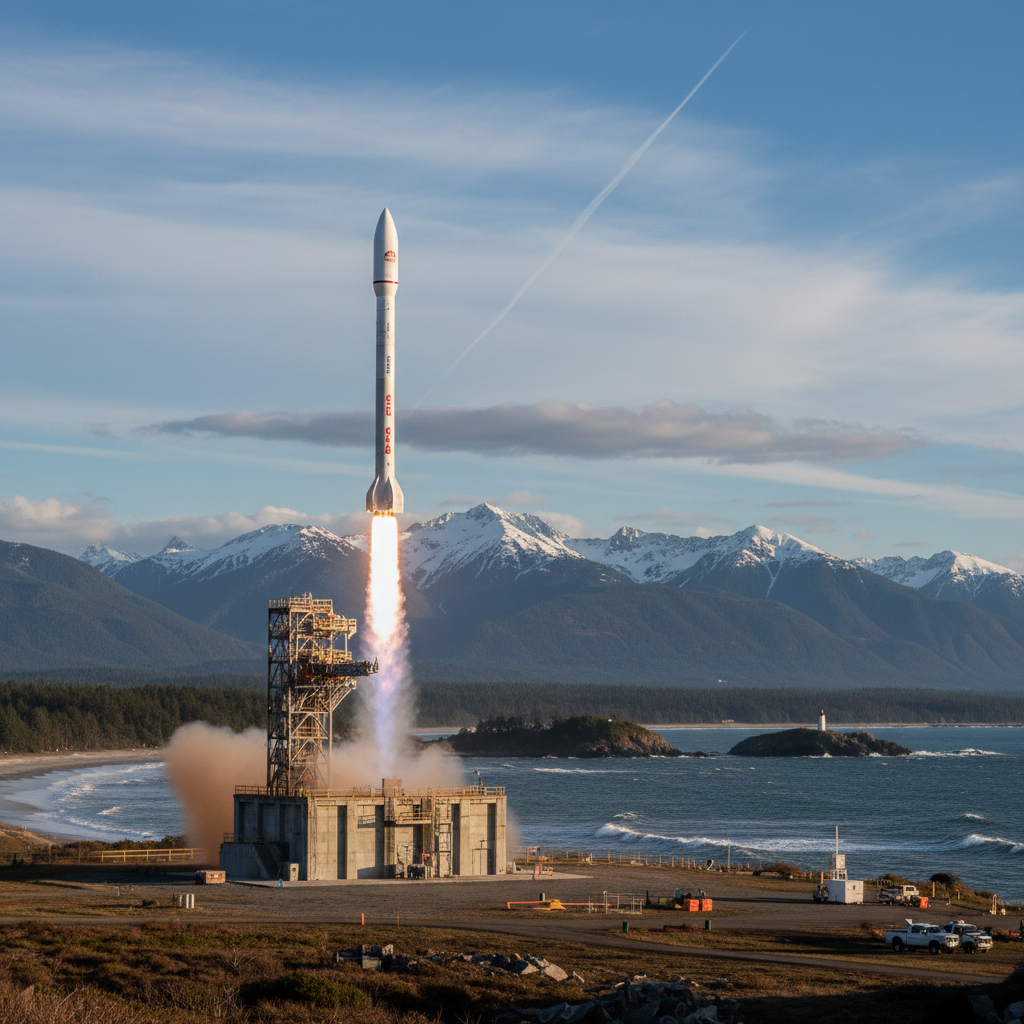
Taiki Town, a little coastal area of Hokkaido, Japan, hosted the test. Thanks to public-private cooperation and support from the Japan Aerospace Exploration Agency (JAXA), this town has evolved over the past few years into a developing space hub. Launched from a test facility there, Honda’s rocket soared 890 feet before descending back to earth and landed remarkably precisely just 37 centimeters from its target.
Designed by Honda’s R&D division, the rocket weighed more than 2,800 pounds and stood almost 21 feet tall. It spent 56.6 seconds in the air using four retractable landing legs for both launch stability and touchdown. The performance showed excellent technical control and great accuracy for a first effort.
From Wheels to Rockets: Honda’s Original Tech Approach
Although rockets seem far from Honda’s conventional wheelhouse, the firm is building them using known tools and expertise. Rather than beginning from nothing, Honda is using already perfected technology, especially from its robotics and automated driving systems.
Now guiding rockets across flight and landing are the same sensors and real-time control software found in its self-driving cars. Honda can enter aeronautical with this approach instead of rebuilding every system from the ground up. Especially in an industry where development expenses can rapidly soar, this is a smart, reasonably priced strategy.
Core of Honda’s design is also reusability. Reusing launch vehicles is not only practical but also required in the modern space scene. Companies like SpaceX have already demonstrated how reusable rockets might change the cost of space travel. Honda’s successful test points to similar thinking, meant to make space access more repeatable and environmentally friendly.
Just the beginning is this successful test flight. By 2029, Honda has aimed for suborbital flight capability. That implies surpassing the Kármán line, which stands at about 100 kilometers (62 miles) above sea level—the threshold of outer space.
Though they are an essential next step in space development, suborbital flights do not put satellites into orbit. They let hardware be tested under space-like conditions and compile useful information free from the complexity of complete orbital missions.
Honda’s space effort is still in the basic research stage at this point. The firm has not promised to commercialize the rocket or provide launch services. Still, there is obvious driving force behind the effort. Honda sees a market in the growing demand for satellite infrastructure, particularly in relation to connectivity, navigation, and data systems that would enable its future mobility offerings.
From vehicle tracking and fleet management to smart city logistics and autonomous driving networks, having the ability to launch satellites could provide Honda an advantage across many of its business divisions.
A Small Town Having a Major Influence
Where the test was carried out, Taiki Town is progressively playing a central role in Japan’s private space initiatives. Aerospace companies seeking launch and testing sites are drawn to the town because of its open airspace, remote location, and strong encouragement of creativity.
Honda’s successful test strengthens Taiki’s transformation’s momentum and supports its standing as Japan’s launchpad for next-generation space initiatives.
The rocket lacked a payload and never headed toward space. Still, it started, soared, and landed with astonishing accuracy. For a company just starting the aerospace business, that is a significant accomplishment.
This test captures Honda’s long-term orientation. These days, it goes beyond only cars. It’s about stretching new frontiers and leveraging current strengths to create something totally fresh. One thing is certain: Honda’s future is no longer just on the road; it also resides in the heavens whether it keeps developing its own launch systems or incorporates the tech into next products.