
- calendar_today August 20, 2025
.
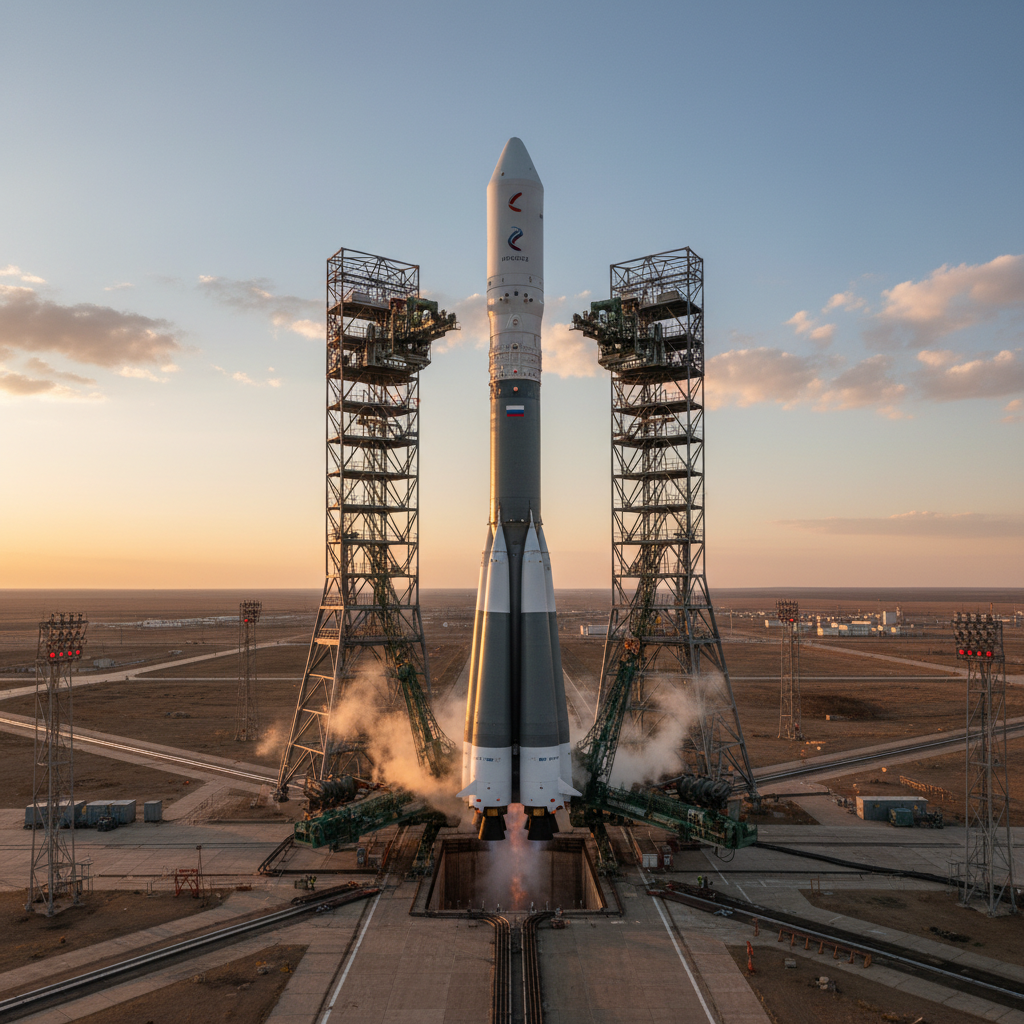
Russia is set to fly its most recent rocket, the Soyuz-5, before the end of the year. Dmitry Bakanov, head of Roscosmos, said this during a recent interview with state news agency TASS.
“Yes, we are planning for December,” he said, adding that preparations for the first liftoff were almost complete. The rocket will launch from the Baikonur cosmodrome in Kazakhstan, a Soviet-built spaceport that Russia still uses. If the launch goes as planned, it will be the maiden flight of a vehicle that has been in development for more than a decade. Roscosmos plans several trials, but the rocket won’t enter operational service until 2028, at the earliest.
Space fanatics should not expect Soyuz-5 to be based on radically new technology. In fact, it is very much built on a familiar design, the Zenit-2 rocket. The Soviet-era rocket design was first developed in the 1980s by the Yuzhnoye Design Bureau, based in Ukraine. Zenit rockets were assembled in Ukraine, but used Russian-made RD-171 engines. As such, they were one of the last examples of cooperation in aerospace between Moscow and Kyiv after the collapse of the Soviet Union. That relationship ended in the spring of 2022 after Russia invaded Ukraine. In late 2023, Russian forces also bombed the Ukrainian plant where Zenits were assembled.
Soyuz-5 is a bigger and entirely Russian-built version of Zenit. The redesign was necessary because Ukraine’s exclusion from the process left an engineering gap. Russian firms have since filled that void, with all the major components now coming from domestic manufacturers. For Moscow, that transition is one part independence from former Soviet reliance on Ukrainian parts. Another goal is to gradually replace its venerable Proton-M launcher with a more modern rocket.
A Bridge Between the Soviet Past and Russia’s Space Future
The Soyuz-5 is a medium-lift launcher from a technical perspective. It is capable of boosting around 17 metric tons to low-Earth orbit. That is roughly on par with Zenit, but achieved with slightly larger propellant tanks. At its heart is the RD-171MV engine, the latest member of an engine family with Soviet roots.
Specifically, the design is based on the Energia program of the 1980s, which powered the Soviet space shuttle Buran. This failed to overcome early difficulties, however, and flew just one mission before cancellation. The RD-171MV engine is special in one way: It uses no Ukrainian components. The kerosene and liquid oxygen-fueled engine produces more than three times the thrust of the main engine on NASA’s Space Shuttle, making it the most powerful liquid-fueled rocket engine in operation.
In a broader sense, Soyuz-5 is a disposable rocket. This is in contrast to newer systems from competitors like SpaceX, which design their launch vehicles with reusability in mind. The difference is important because it calls into question the likelihood that Soyuz-5 will ever carve out a meaningful share of the international launch market.
The vehicle is still important for Roscosmos, however. Funding for space has been limited due to war spending and international sanctions, meaning that a brand-new reusable rocket has proved difficult to develop. The Amur, or Soyuz-7, project was designed to fill that gap. A reusable first stage and methane-fueled engines were part of the design. Theoretically, Amur could one day offer launches at SpaceX-level prices. But delays have pushed the launcher’s debut back to at least 2030.
In the interim, Soyuz-5 can fill a gap. It is a step forward for Russia’s space program, even if it does so with Soviet-era technology.
Commercially, the outlook is more opaque. The international launch industry has transformed in the last decade, with SpaceX and Chinese providers offering cheaper and more flexible services. Russia continues to operate Soyuz-2 rockets for crewed flights and Angara rockets for heavier payloads. Neither family has found much of an international market, however. Soyuz-5 may change that, but its chances are unclear.
Still, the fact that Roscosmos has brought Soyuz-5 to the launch pad under difficult circumstances is noteworthy. A successful flight in December would show that Russia, under sanctions and a tight budget, can still get new hardware into the air.
Soyuz-5 won’t likely revolutionize rocket design, but it has meaning for Moscow. The rocket is one step on a path toward self-reliance, an end to the Soviet past, and a stepping stone to what’s next, whether that’s Amur or another generation of rockets still on the drawing board.