
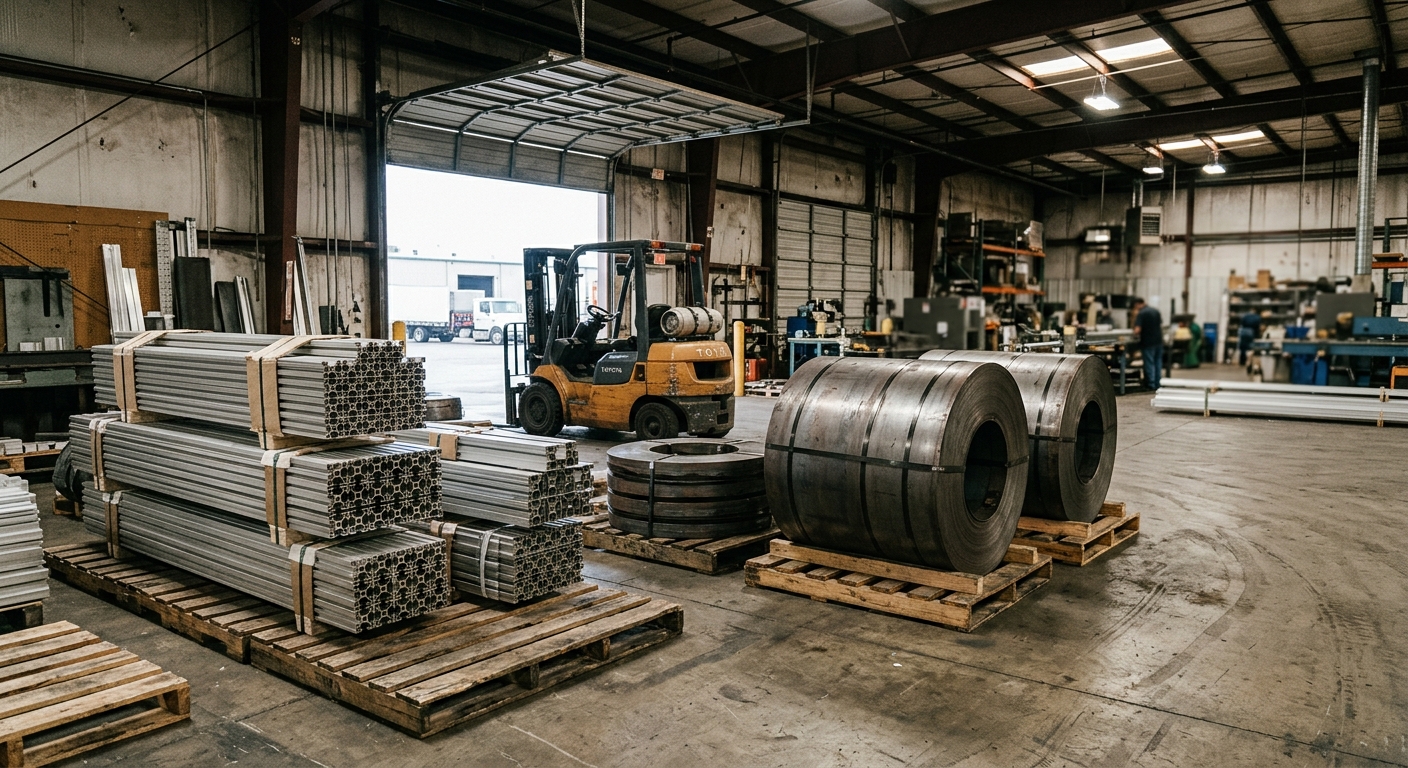
AI-generated illustration; not a photograph of the reported event.
- calendar_today October 11, 2026
Growing Pressure on U.S. Manufacturers
U.S. manufacturers are grappling with mounting costs as a result of ongoing trade policies introduced under President Donald Trump. The combination of increased tariffs, a continuing trade war with Canada, and the destabilizing effects of the Iran conflict has placed significant financial burdens on many producers, particularly in industries reliant on aluminum and related materials.
Aluminum Tariffs Impact Ohio Manufacturers
Doug Rende, chief executive of Shapes Unlimited in North Jackson, Ohio, has witnessed the direct effects of these policies on his aluminum manufacturing business. Trump's escalating tariffs on aluminum—starting at 10 percent during his initial presidency, rising to 25 percent and ultimately reaching 50 percent last year—have dramatically increased operational costs.
According to Rende, "This year alone, it’s upwards of US$4.5 million to $5 million in additional costs." The company, which makes and distributes aluminum building products such as fence fixtures, has absorbed much of these increased expenses. "There’s only so much that the end consumer is willing to eat," Rende noted. As a result, Shapes Unlimited has put hiring plans on hold and shifted investment into robotic assembly lines to manage costs.
Effects of Trade War with Canada
Trade barriers between the U.S. and Canada have further strained American manufacturers. Deteriorating relations were exacerbated when trade negotiations collapsed in August, leading both countries to impose reciprocal tariffs on various goods. Sam Miller, who manufactures kitchen and bathroom products in Warren, Ohio, has faced similar challenges. Not only has he paid tariffs on imported materials from Asia, but the intensified canada trade dispute has complicated efforts to expand his business across the border.
"We’re selling into Canada and it is particularly straining on both us and our customers," Miller explained. Plans to launch a distribution facility in Canada this year have been delayed by the increased uncertainty and higher costs that have resulted from the standoff.
Escalation Due to the Iran Conflict
The ongoing Iran conflict has compounded the financial pressure on U.S. manufacturers by disrupting global supply chains. With the U.S.-Israel war on Iran driving up fuel prices and triggering freight surcharges, costs for shipment have soared. Rende reported transportation surcharges "upwards of $6,500 per container" from suppliers, while aluminum supplies have also been hit by drone attacks in the Middle East.
Guy Coviello, president of the Youngstown Warren Regional Chamber, noted that these issues present a "mixed bag" for the region's approximately 3,000 member firms, but their overall impact has been negative. Some companies have lost customers or been forced to scale back operations as a direct result of these developments linked to both us tariffs and the Iran conflict.
Tariff Impact and Policy Uncertainty
While some U.S. producers have benefited by facing less foreign competition due to higher trade barriers, others find themselves dealing with persistently rising manufacturing costs and significant market uncertainty. Since returning to office in 2025, President Trump has continued to exercise executive authority to impose tariffs on products ranging from steel and autos to a broader array of goods, creating uneven effects across sectors.
Trade ties between the U.S. and Canada remain especially important for states like Ohio, with a third of the state’s exports destined for Canada. Coviello highlighted the complexity of trade, noting that some goods cross the border multiple times during production, further entangling businesses in the consequences of fluctuating trade policy and tariff impact.
Looking Ahead: Challenges Remain
The uncertainty stemming from fluctuating us tariffs, ongoing trade disputes, and the fallout from the Iran conflict is likely to remain a major concern for U.S. manufacturers in the near term. Business leaders and industry groups continue to monitor these developments closely, mindful of their potential to reshape the American manufacturing landscape as well as trade relations with key partners like Canada.
Source: nationalpost.com.