
- calendar_today August 14, 2025
Canada’s real estate landscape in 2025 reflects a country recalibrating after years of economic flux. While the Bank of Canada has signaled stability in interest rates, investors remain focused on fundamentals: cash flow reliability, location demand, and demographic shifts. Amid affordability pressures and policy changes, smart capital is flowing into asset types aligned with long-term national trends.
Across the country—from British Columbia to Atlantic Canada—seven real estate sectors stand out for their resilience, adaptability, and future growth potential. These are the property types that are not just surviving the market transition but evolving alongside it.
Multifamily Housing: The Reliable Performer
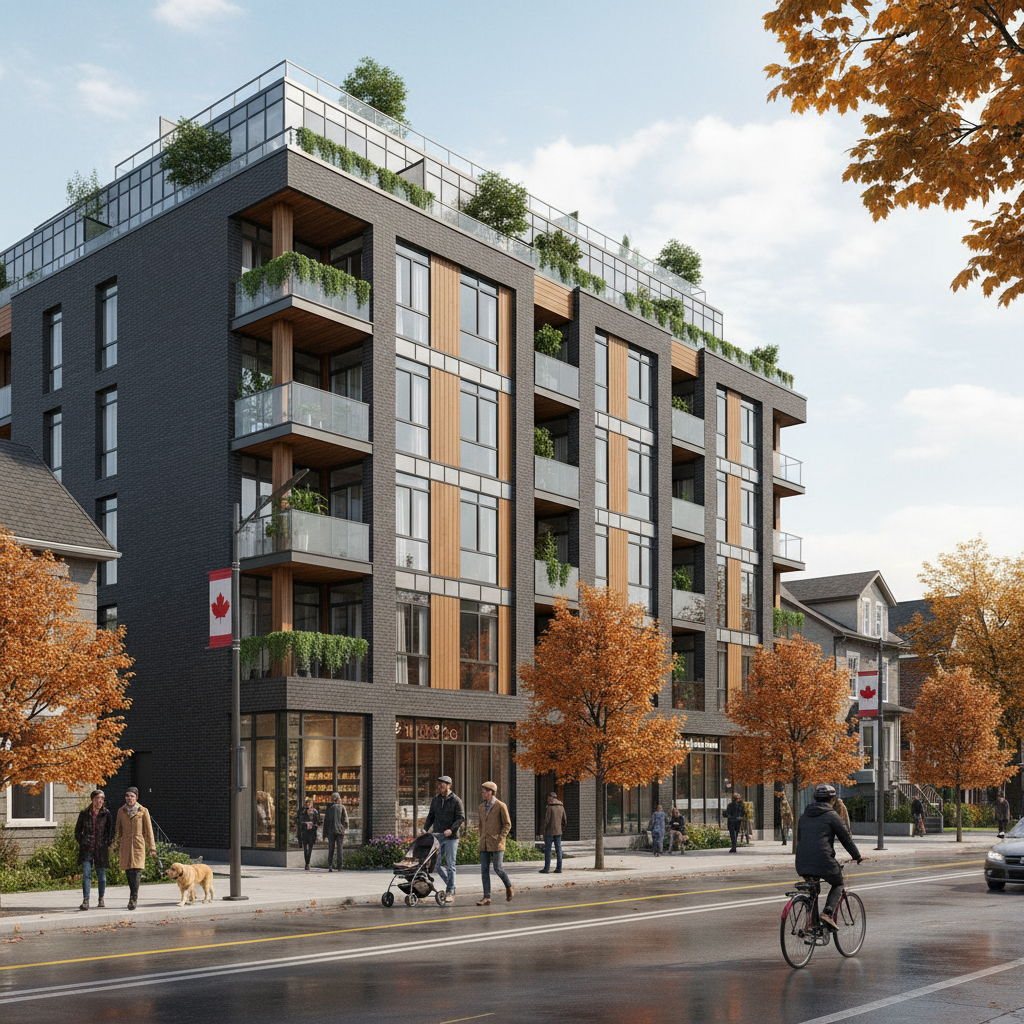
Multifamily rental housing continues to be a cornerstone of Canadian investment portfolios, particularly in urban centers like Toronto, Vancouver, Calgary, and Ottawa. Sky-high home prices and elevated interest rates have sidelined many would-be buyers, pushing rental demand to new highs.
CMHC data shows national apartment vacancy rates below 2%, with average rents rising more than 6% year-over-year in key markets. Mid-rise and purpose-built rental developments are thriving, especially in regions with strong immigration, such as Ontario and British Columbia. Even smaller cities—like Halifax and Kelowna—are seeing rising demand. For investors, steady cash flow and long-term tenant retention make multifamily a consistent performer.
Industrial Properties: A Growth Engine Across Provinces
Canada’s industrial real estate sector is showing no signs of slowing down. Warehousing, cold storage, and light manufacturing are in high demand across regions like the Greater Toronto Area, Calgary-Edmonton corridor, and southern Quebec.
According to CBRE’s Q2 2025 industrial report, national vacancy rates remain below 2.5%, while rents in top logistics hubs have surged by 7–9% year-over-year. E-commerce, domestic manufacturing, and nearshoring trends are fueling this growth. Demand for AI-integrated and automation-ready facilities is rising, especially near ports and intermodal terminals. Industrial REITs and institutional investors are aggressively expanding in this space.
Single-Family Rentals in Suburban Markets
With homeownership increasingly out of reach for many Canadian families, the single-family rental (SFR) sector is gaining significant traction. Suburban markets around Toronto, Montreal, Calgary, and Ottawa are seeing increased demand for detached rentals offering space, privacy, and proximity to schools and transit.
Roofstock Canada reports growing investor interest in SFR portfolios across regions like Waterloo, Barrie, Gatineau, and Langley. These properties typically attract reliable, long-term tenants and require less turnover than urban multifamily units. For investors, the SFR model offers stability and appreciation potential, particularly in suburbs with infrastructure growth and strong employment nodes.
Migration Trends: Major Centers vs. Secondary Cities
Internal migration continues to shape Canada’s real estate dynamics in 2025. While cities like Toronto and Vancouver remain economic powerhouses, affordability issues are pushing people toward smaller, more livable cities such as London (ON), Moncton, Saskatoon, and Nanaimo.
These markets offer lower barriers to entry, growing populations, and increasing institutional interest. Remote work and regional development incentives are making these cities more attractive to both residents and investors. New builds, townhome developments, and mixed-use neighborhoods are gaining momentum in places previously overlooked.
Mixed-Use Developments & Urban Core Recovery
Canada’s urban centers are gradually recovering their vibrancy. Downtown districts in Montreal, Edmonton, and Victoria are seeing renewed interest in mixed-use developments that blend residential units with coworking, retail, and entertainment spaces.
Transit-oriented developments (TODs) are especially popular, aligning with federal and provincial infrastructure goals. While planning and approval processes can be slow—especially in cities like Toronto and Vancouver—developers are finding long-term value in walkable, amenity-rich communities that appeal to professionals, students, and downsizers alike.
Niche Assets on the Rise: Senior & Student Housing
Senior housing is experiencing a surge across much of Canada. With the population aging rapidly, demand for independent living, memory care, and assisted living is growing in provinces like Ontario, Alberta, and Nova Scotia. NIC Canada reports national occupancy rates approaching 86% in Q1 2025, particularly in well-served urban and suburban zones.
Meanwhile, student housing is back in full force. Universities in cities like Waterloo, Kingston, Halifax, and Victoria are seeing high pre-leasing rates, often exceeding 90%. Students now expect high-speed internet, furnished apartments, and common social areas—pushing developers to modernize offerings. Purpose-built student housing is gaining traction as a dependable asset class with strong annual turnover.
Risk Factors and Investment Cautions
Despite nationwide opportunities, Canada’s real estate market presents region-specific risks. In coastal areas like British Columbia and Nova Scotia, rising insurance costs tied to wildfire and flood risk are pressuring margins. Meanwhile, aging infrastructure in parts of Quebec and Atlantic Canada may require additional investment.
Policy changes also pose a challenge. Rent controls, foreign buyer taxes, and new zoning laws—particularly in British Columbia and Ontario—can shift project viability quickly. Additionally, construction costs remain high, and while interest rates have stabilized, financing remains more expensive than in the pre-2022 environment.
Careful underwriting and alignment with local policies are critical to protect ROI.
Expert Insight: What the Analysts Say
“Multifamily and industrial remain the bedrock of Canadian real estate portfolios, but regional expertise is essential,” says Lauren Bellingham, senior economist at CBRE Canada. “Knowing how policies vary between Toronto, Calgary, and Halifax can make or break an investment.”
Redfin’s Canadian Outlook for 2025 highlights affordability, immigration-driven growth, and infrastructure spending as key factors. Analysts recommend focusing on long-term demographic shifts and sustainable community growth rather than short-term speculation.
Strategic Diversification is Key in 2025
Canada’s most successful investors in 2025 are embracing diversified, regionally informed strategies. Multifamily housing continues to deliver stability in high-growth urban and mid-sized markets. Industrial properties, from logistics hubs in Alberta to distribution centers in Quebec, are outperforming expectations.
SFRs are proving invaluable in family-centric suburban areas, while mixed-use and niche housing projects—especially for seniors and students—are responding to powerful demographic currents. The gap between regions with supportive policy frameworks and those with high entry barriers is widening.
Investors who combine long-term planning, location-specific knowledge, and flexibility are best positioned to thrive in Canada’s evolving real estate market.