- calendar_today August 24, 2025
The Sandman Season 2: Family, Fate, and Finality
Netflix’s faithful adaptation of Neil Gaiman’s critically acclaimed 12-volume graphic novel series The Sandman has come to a close with the second and final season. Those who found Season 1 a worthy adaptation of Gaiman’s surreal, Gothic series, with a special focus on its dream-like tone, will not be disappointed with the finale. Dream again finds himself in the center of his own story after the first half-season anthology introduction.
News of The Sandman getting canceled after Season 2 quickly spread rumors that Netflix may have pulled the plug due to sexual assault allegations against Gaiman. (The author has categorically denied these charges.) Showrunner Allan Heinberg promptly went on X to clarify that the entire project, including Season 1, had been greenlit for two seasons only. Heinberg added that he and his team had felt from the beginning that they could successfully stretch the source material for only two seasons of the series, and with the final credits of the second season, the gambit is looking like a sound one.
Season 1 closely adapted Preludes and Nocturnes and The Doll’s House, with bonus episodes adapting the one-shot “Dream of a Thousand Cats” and “Calliope” from Dream Country. Season 2 is based on Seasons of Mists, Brief Lives, The Kindly Ones, and The Wake, with essential elements adapted from Fables and Reflections (“The Song of Orpheus” and segments of “Thermidor”), as well as the award-winning “A Midsummer Night’s Dream” from Dream Country. The bonus episode is based on the 1993 one-shot spinoff Death: The High Cost of Living. We do not see some of the events of A Game of You or certain short stories, which is not a major problem for the show’s primary focus on the Dream King’s arc.
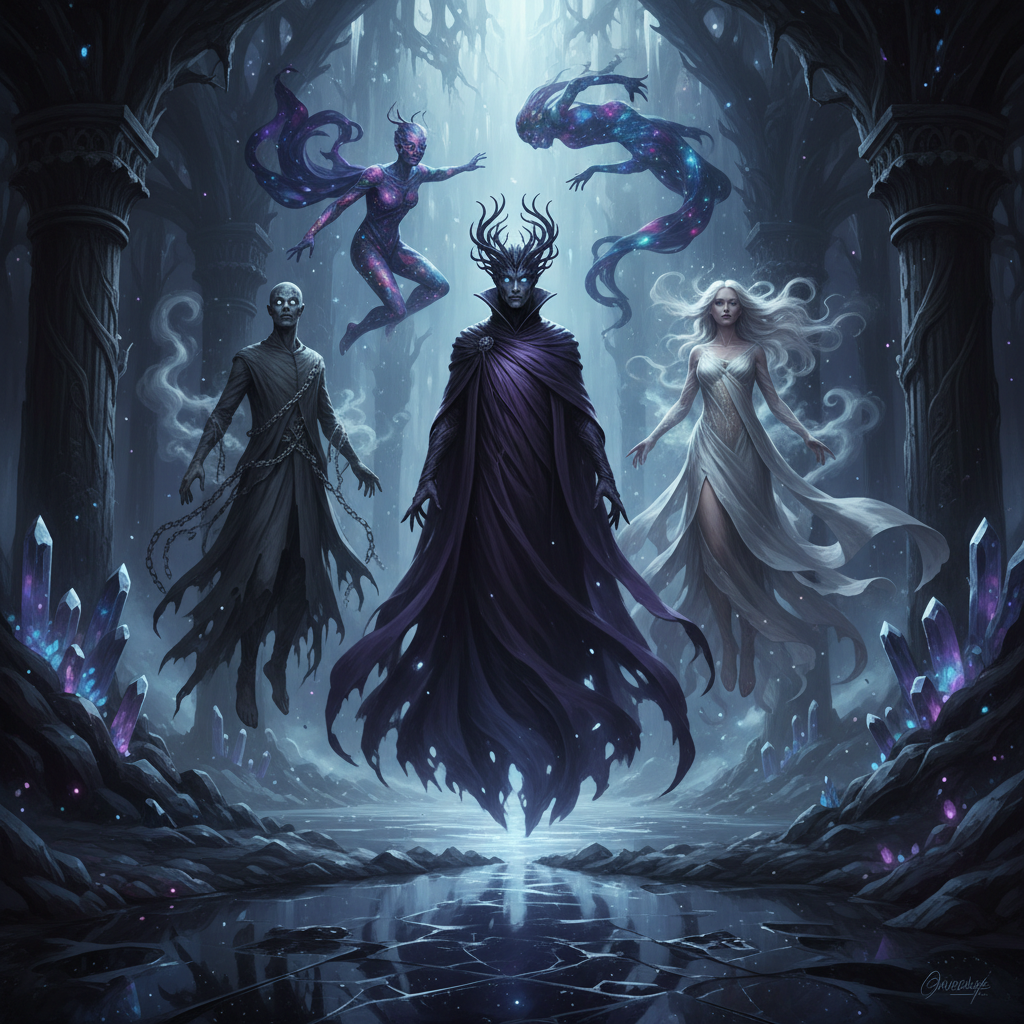
Season 1 saw Dream break out of his prison, recover his stolen talismans, defeat the escaped Corinthian (Boyd Holbrook), and fix the rip in reality caused by the Vortex incident. Season 2 sees him rebuilding the Dreaming. His job is interrupted by a summons from his sister Destiny (Adrian Lester), who calls him and his other three children (Death (Kirby Howell-Baptiste), Desire (Mason Alexander Park), Despair (Donna Preston), and Delirium (Esmé Creed-Miles) to a difficult family meeting.
This meeting forces Morpheus (Tom Sturridge) to rescue his former lover, Nada (Umulisa Gahiga), queen of the First People, from Hell, a punishment Morpheus had himself imposed on her. Morpheus’s intervention will set him on another collision course with Lucifer (Gwendolyn Christie), who is still simmering from her Season 1 defeat. However, Lucifer has no interest in a rematch with Morpheus; instead, she surprises him by resigning from her office and leaving Dream with the key to an empty Hell, her choice of whom to leave in charge of the realm after Dream, with options including Odin, Order, Chaos, and the demon Azazel.
Motivated by Delirium’s desire to find their missing brother Destruction (Barry Sloane), who abandoned his realm hundreds of years ago, Morpheus is on the way to his own destiny—violating family taboo by spilling family blood and invoking the wrath of the Kindly Ones.
Highlights, Lowlights, and Finale
Netflix has certainly kept the series’ production quality high, including wonderful casting and visuals. The art and CGI team has done a great job at visually translating the source material, including the many colors, costumes, and creatures that so vividly populate the graphic novel. Although some viewers have grumbled that the show has a slow pace, to be honest, it is one of its deliberate choices, and I personally enjoyed taking my time in Gaiman’s intricate and storied world.
The season’s low point comes in the episode “Time and Night,” where Dream enlists the help of his aged parents, Time (Rufus Sewell) and Night (Tanya Moodie), in his current travails. It is not necessarily a bad idea from a canon perspective: The Endless are, after all, their children. However, this subplot has the most clunky dialogue of the series. No matter how hard Sewell tries, it reads like a therapy session, not fantasy.
Standout moments include Lucifer asking Dream to cut off her wings; the goddess Ishtar (Amber Rose Revah) dropping her facade of decorum one last time to dance like the goddess she truly is; Dream explaining to William Shakespeare that he needs to write The Tempest and cannot write any other play; the reformed Corinthian finally connecting with Johanna Constantine (Jenna Coleman) and developing a genuine crush. Other unforgettable moments include Orpheus’ lament for the Underworld; Dream killing his son out of mercy; and the terrifying power of the Furies, who destroy Fiddler’s Green (Stephen Fry), Mervyn Pumpkinhead (Mark Hamill), and Abel (Asim Chaudhry) in a fit of cosmic anger.
Dream’s death comes with him holding Death’s hand once more and leaving the office open for a new personification. In one final heartbreaking stroke, Dream tells Death, “Pick the one that matters.” That person turns out to be Daniel Hall (Jacob Anderson), the first and only human who had been conceived in the Dreaming. Temporarily confused by Dream’s last act but still fated for greatness, Daniel takes up the mantle, even as his Endless siblings mourn Morpheus and welcome their latest sibling into their embrace.