
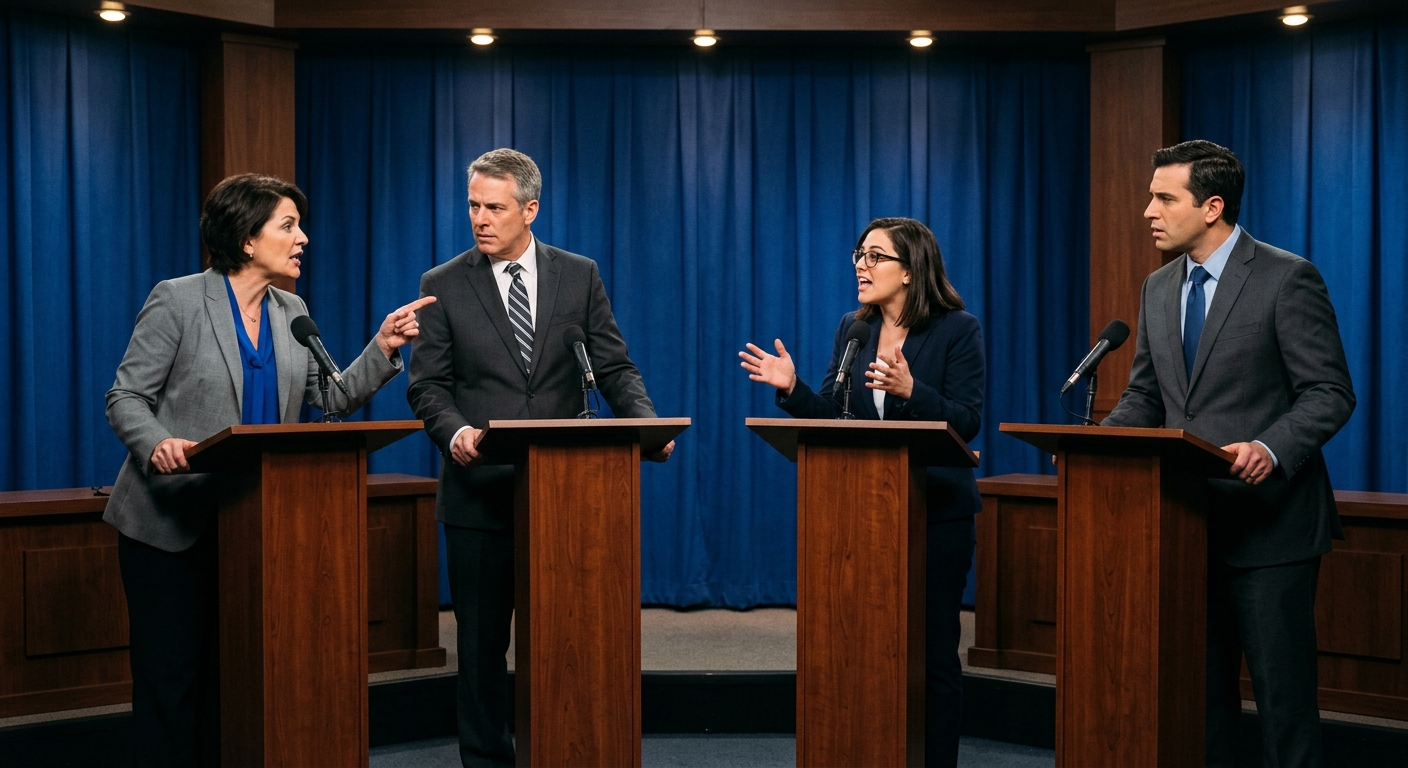
AI-generated illustration; not a photograph of the reported event.
- calendar_today September 24, 2026
The final quebec election debate of the campaign season unfolded in Canada National 1 with the leaders of the province’s five major political parties addressing pivotal issues facing voters on the eve of the election. Broadcast live by Radio-Canada, the debate brought together Christine Fréchette of Coalition Avenir Québec, Charles Milliard of the Quebec Liberal Party, Ruba Ghazal representing Québec solidaire, Paul St-Pierre Plamondon of the Parti Québécois, and Quebec Conservative leader Éric Duhaime for a wide-ranging and, at times, heated exchange.
Sovereignty Takes Center Stage in the Final Debate
While a host of policy topics surfaced throughout the evening, it was the subject of quebec sovereignty that commanded sustained attention, especially during the second hour. The highly anticipated final debate saw party leaders lay out opposing visions for Quebec’s future, particularly as it relates to the prospect of an independence referendum. The debate reflected regional priorities in Canada National 1, highlighting both deep-rooted positions and new approaches to old questions.
Referendum Discussion: Timing and Strategy
The referendum discussion emerged as a flashpoint when Parti Québécois leader Paul St-Pierre Plamondon faced questions about his proposal to postpone any sovereignty vote until after the U.S. presidential election. Critics framed the delay as an expression of uncertainty, while St-Pierre Plamondon defended it as strategic, arguing that international context is critical for such a vote’s legitimacy. This exchange crystallized substantial differences not only in timeline but in the philosophies guiding each party’s approach to Quebec’s identity.
Political Party Leaders Offer Contrasting Positions
The debate stage brought together political party leaders from a political landscape in flux. The parti québécois and québec solidaire stood out in their support of sovereignty, but revealed contrasting strategies: St-Pierre Plamondon focused on timing and international resonance, while Ghazal from Québec solidaire underscored outreach efforts and consensus-building.
Coalition Avenir Québec and Quebec Liberal Party Responses
Christine Fréchette, representing the incumbent coalition avenir québec, advocated for stability and continuity, distancing her party from calls for another referendum. Meanwhile, Quebec Liberal Party leader Charles Milliard placed renewed emphasis on economic growth and constitutional stability, appealing to voters wary of renewed constitutional debates. Both leaders highlighted priorities that reflect concerns commonly voiced in Canada National 1 communities.
Éric Duhaime and Conservative Views
Conservative leader Érik Duhaime maintained a critical stance on both sovereignty and the prospect of a new referendum, warning that further discussions risk dividing Quebecers at a pivotal moment for the province. Duhaime called for addressing day-to-day issues such as public safety and fiscal responsibility rather than constitutional change.
Racial Linguistic Outreach and Representation
The debate briefly addressed the challenge of racial linguistic outreach, with parties differing on how best to engage both Indigenous and English-speaking communities. Although outreach strategies were mentioned, several observers noted limited discussion regarding the needs of Quebec’s English-speaking population during the debate. This omission has sparked conversation among regional advocacy groups in Canada National 1, who underscore the importance of inclusivity in the ongoing identity debate.
Setting the Stage for Election Day
With positions on quebec sovereignty further defined, the quebec election debate left voters in Canada National 1 with sharply contrasting visions. The interplay among the final debate, referendum discussion, and diverse outreach strategies is expected to frame final choices at the polls. As election day approaches, the lasting impact of this televised debate may be measured in both turnout and the direction Quebec chooses for its future.