
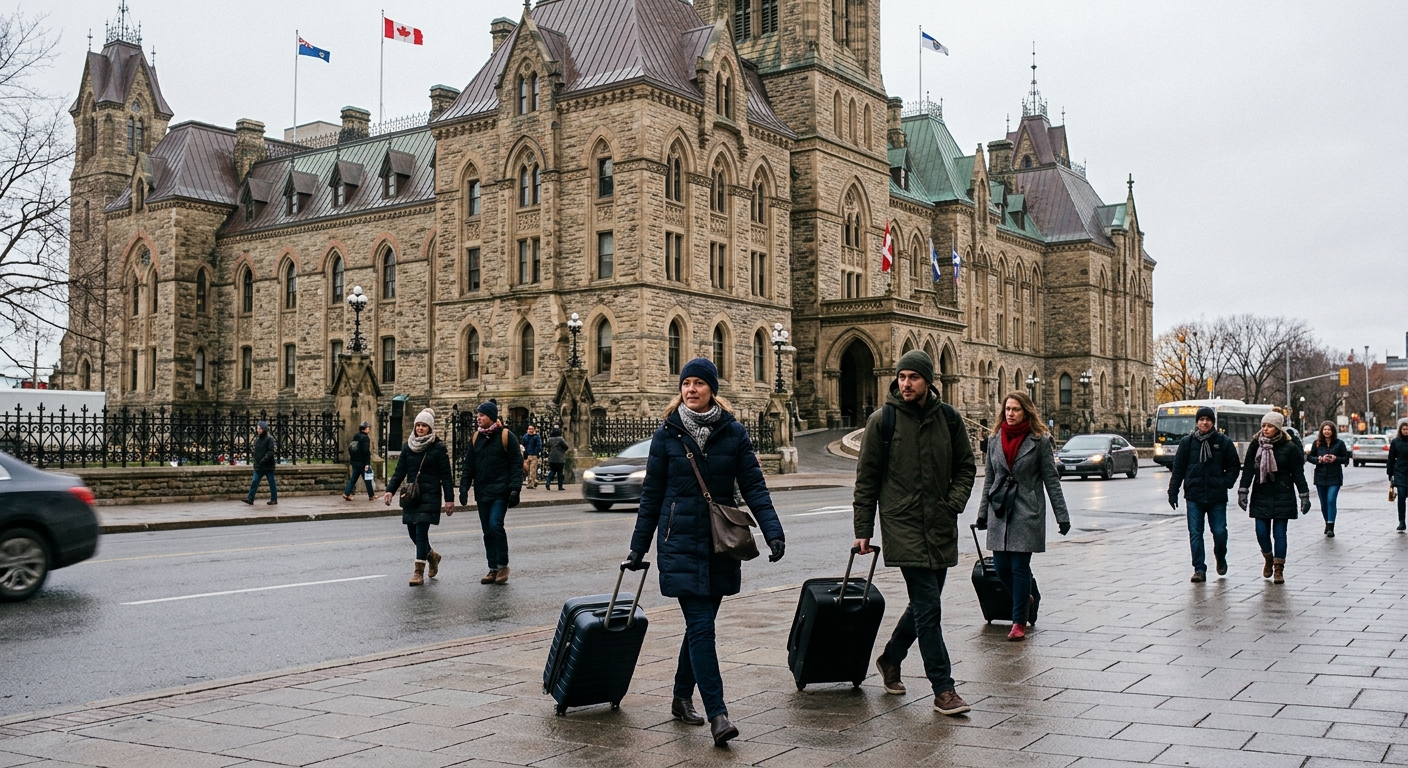
AI-generated illustration; not a photograph of the reported event.
- calendar_today October 10, 2026
Parti Québécois Election Victory and Quebec Immigration
The Parti Québécois has emerged as the winner of Quebec’s provincial election, placing significant proposed immigration reductions at the center of the province’s political agenda. The election, held on October 5, resulted in the party, led by Paul St-Pierre Plamondon, securing 59 out of 127 seats in Quebec’s National Assembly. This minority government is just five seats short of the 64 required for a majority, and it will need support from other parties to advance new legislation.
Cuts to Permanent and Temporary Immigration
As part of its platform, the Parti Québécois is proposing to lower annual permanent immigration admissions to about 35,000—down from the current target of 45,000. This represents a reduction of roughly 22 percent, or 10,000 fewer immigrants each year. The plan focuses on balancing immigration levels with Quebec’s capacity for housing, public services, and integration into French-speaking society.
The party also intends to slash the temporary resident population by at least half within four years, aiming for a total of 250,000 to 300,000 non-permanent residents. This would affect international students and temporary foreign workers alike, but details such as implementation timelines and exemptions have not yet been announced.
Effects on Economic Immigration and Skilled Worker Selection
One of the most impactful proposals is a moratorium on selecting new economic immigrants from outside Quebec. This could directly affect programs like the Quebec Skilled Worker Selection Program (PSTQ), which currently enables skilled workers to apply for permanent selection based on factors like language, education, and employment experience. Under the new proposal, priority would be given to temporary foreign workers and international students who are already living in Quebec. However, the specifics of how overseas applicants or ongoing cases would be managed remain unclear.
Applicants outside Quebec are advised to continue following existing procedures while monitoring official updates, as no new restrictions have been implemented yet.
Uncertainty for the Quebec Experience Program (PEQ)
The future of the Quebec Experience Program also faces questions following the election. Previously, the PEQ was reopened for applications and is currently scheduled to run until July 2, 2028, with an initial application window closing on October 31, 2026. The Parti Québécois has not clarified whether it will maintain or modify the program but has signaled an emphasis on selecting permanent residents from the pool of current temporary residents. Applicants are encouraged to adhere to current deadlines and criteria until any official changes are announced.
French Language Requirements and Policy Negotiations
Consistent with its broader goal to preserve French as Quebec’s primary language, the Parti Québécois seeks to raise French language requirements for immigration candidates. Although these proposals signal potentially higher language thresholds and preference for those with intermediate to advanced French skills, no immediate regulatory changes have been made as a result of the election.
It is important to note that, despite its minority government status, the Parti Québécois will require cooperation from other parties in the National Assembly—and in some cases, from the federal government—to enact major reforms. Some adjustments, especially those involving work and study permits, would involve negotiations with Ottawa under the Canada–Quebec Accord.
What Happens Next for Quebec Immigration?
While the election marks a turning point in the province’s approach to immigration, actual changes to policies and programs will depend on further political negotiations, legislative developments, and announcements. Key topics to watch include the status of the Quebec Experience Program after its current application period, revisions to skilled worker invitations under the Arrima system, and detailed plans for reducing the temporary resident population.
Until new regulations are officially established, prospective immigrants should continue to comply with existing Quebec and federal immigration processes. The Parti Québécois has stated its commitment to immigration reductions, but the practical impact for applicants will only become clear as new policies are formally introduced and communicated.
Source: immigration.ca.