
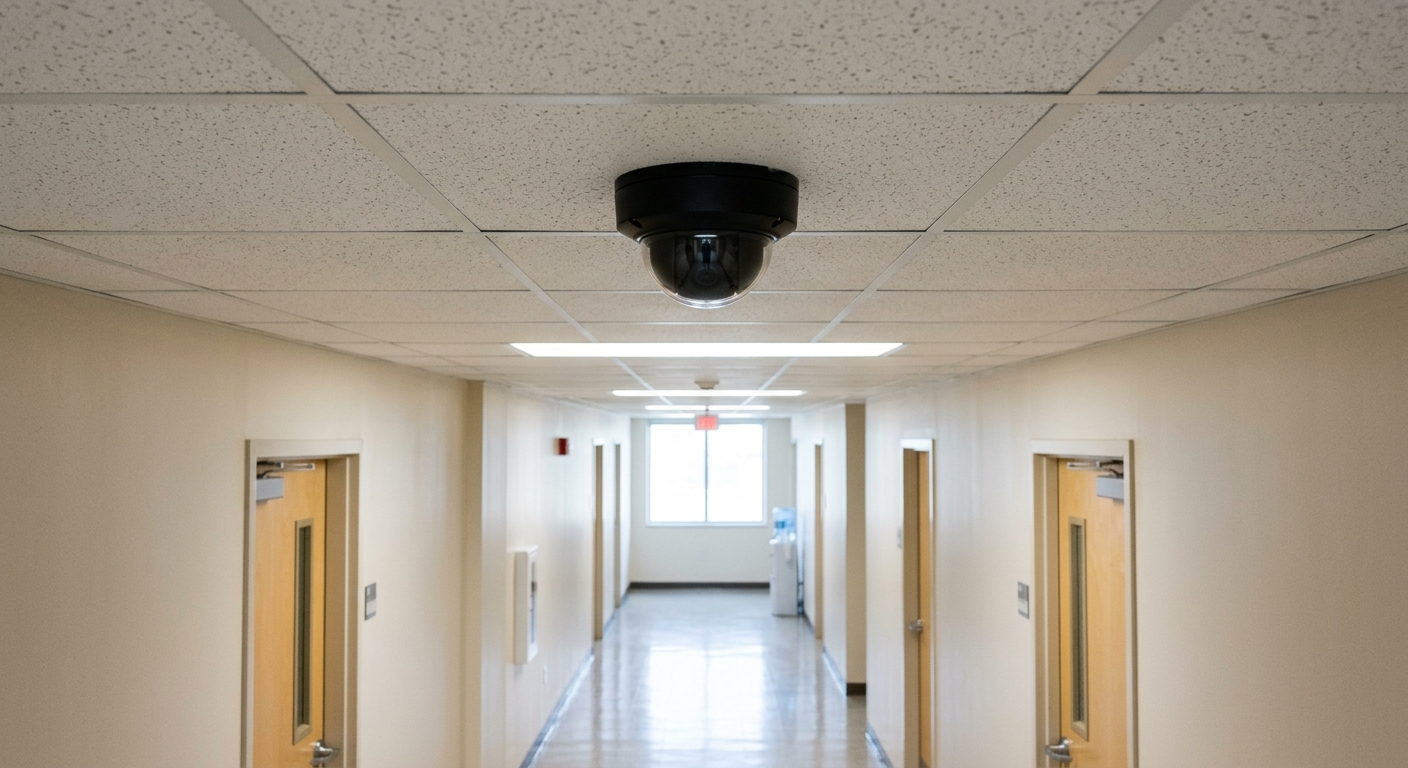
AI-generated illustration; not a photograph of the reported event.
- calendar_today October 13, 2026
Federal Ban on Hikvision Cameras Due to Security Risks
In June 2025, Industry Minister Mélanie Joly announced a federal ban on the use of Hikvision cameras in government buildings across Canada. The decision stemmed from concerns over espionage and mass surveillance linked to Hikvision, a company partly owned by the Chinese government. Authorities cited national security and security risks as primary reasons for the ban. The order required not only the removal of Hikvision Canada’s surveillance technology from all federal government offices, agencies, and Crown corporations, but also gave the company 120 days to cease Canadian operations.
Several Agencies Still Using Banned Cameras
Despite the ban, a recent report revealed that at least two federal agencies—the National Research Council (NRC) and the Windsor-Detroit Bridge Authority—continue to use Hikvision cameras. The NRC stated it removed Hikvision surveillance equipment from its main security systems in 2025. However, the organization acknowledged that some cameras remain in use for monitoring non-sensitive experiments and work areas, with a promise to remove all such equipment by the end of the year.
The Windsor-Detroit Bridge Authority, which manages the Gordie Howe International Bridge, also confirmed it still uses Hikvision cameras in a community meeting space and expects these to remain in place until November. Housing and Infrastructure Minister Gregor Robertson’s office noted progress in removing the legacy equipment and explained that only public, non-confidential information is handled in the affected office. Mitigation measures—such as disconnecting internet connectivity and remote access—have been implemented to manage risks during the transition.
Calls for Government Compliance and Criticism from Opposition
Responding to these developments, Minister Joly issued a statement calling the continued use of banned Hikvision cameras “unacceptable” and instructed her department to ensure all federal agencies, such as the NRC, comply fully with the ban and complete camera removal. Conservative Leader Pierre Poilievre’s spokesperson, Sam Lilly, criticized the Liberal government, questioning its transparency and commitment to removing security cameras from government buildings. Lilly argued that if officials cannot confirm such basic compliance, the public should question their ability to fulfill broader promises.
Uncertainty Around Other Agencies’ Compliance
While most organizations that previously used Hikvision gear reported removal, five bodies did not confirm compliance: the Canadian Space Agency, Employment and Social Development Canada, Environment and Climate Change Canada, Agriculture and Agri-Food Canada, and Parks Canada. Their lack of disclosure has raised further concerns about the thoroughness of government compliance with the federal ban.
Hikvision’s Response and Broader Concerns About Surveillance Technology
Hikvision is currently contesting the federal government's ban in Federal Court and has denied all allegations regarding its products and operations. The issue also prompted political criticism of Prime Minister Mark Carney, with Bloc Québécois leader Yves-François Blanchet referencing Hikvision’s reported involvement in surveillance of Uyghur minorities in China. Blanchet questioned the government’s focus, suggesting greater attention be paid to security risks and Chinese surveillance concerns.
Michael Kovrig, CEO of Kovrig Group and a former Canadian diplomat previously detained by China, emphasized that security technology from companies subject to Chinese intelligence laws has no place in government buildings. Kovrig highlighted that China itself does not allow foreign cameras in its systems, further underscoring concerns about espionage through surveillance technology.
Ongoing Camera Removal and National Security Priorities
The majority of federal agencies have indicated that Hikvision cameras have been removed as required. However, continued uncertainty and delayed camera removal by several organizations highlight ongoing challenges in fully enforcing the federal ban and addressing national security priorities related to surveillance technology.
Source: nationalpost.com.