- calendar_today June 25, 2026
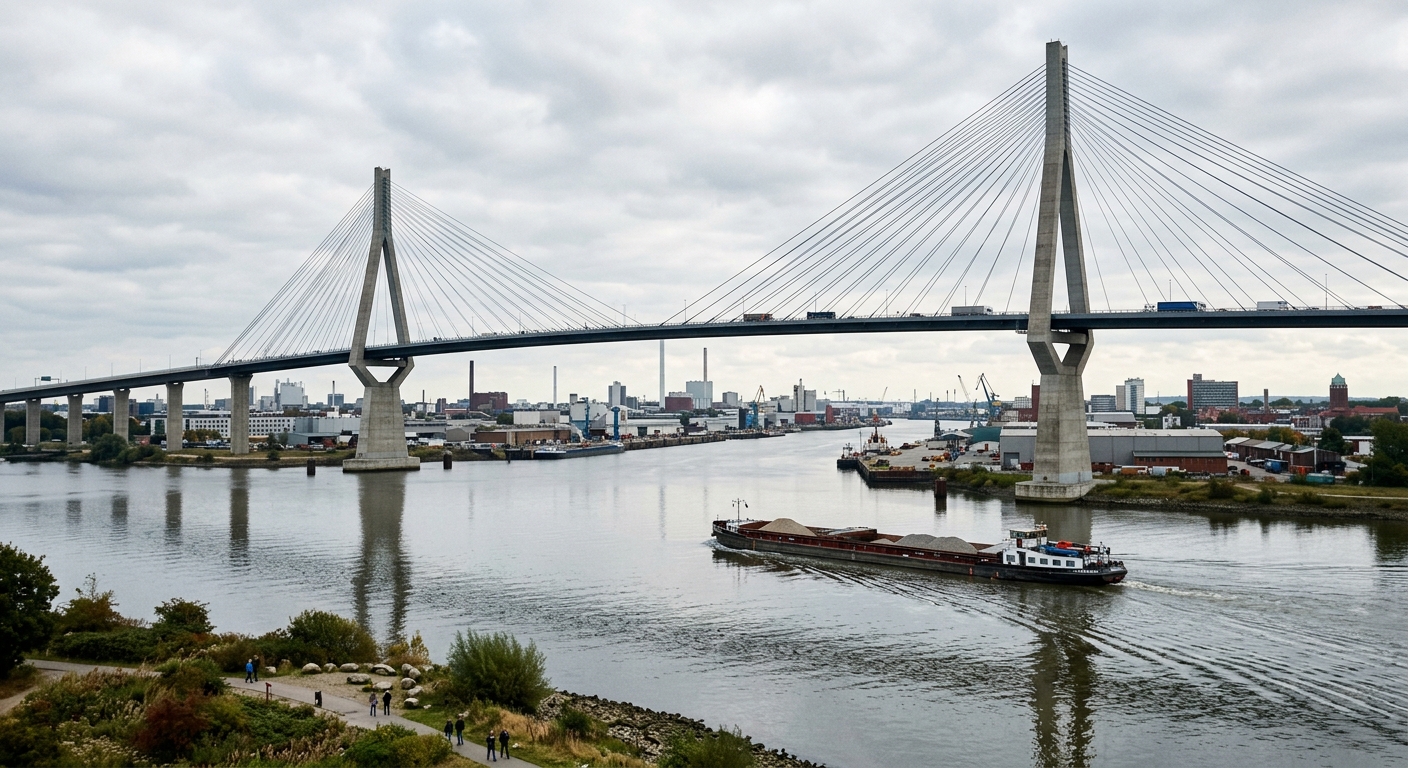
Canada National 1 — The highly anticipated opening of the Gordie Howe Bridge, a modern marvel in international trade infrastructure connecting Michigan and Windsor, Ontario, remains on hold as disputes over political influence and private interests come to the forefront. Designed to offer a critical new Detroit River crossing, the bridge is financed entirely by Canadian funding and is set to facilitate nearly a quarter of US Canada trade.
Controversies Surrounding Bridge Opening Delay
The bridge opening delay has drawn sharp criticism and attention from public officials and stakeholders on both sides of the border. Mallory McMorrow, a Michigan state senator and U.S. Senate candidate, publicly accused former President Donald Trump and the Trump administration of halting the bridge’s launch, citing the significant campaign contributions made by the Moroun family, owners of the nearby Ambassador Bridge. McMorrow’s comments have underscored longstanding tensions over the privately owned Ambassador Bridge’s competition with the state-of-the-art Gordie Howe Bridge.
Canadian Perspective: Technical Concerns and Optimism
From the Canadian side, there has been an emphasis on pragmatism and collaboration. Prime Minister Mark Carney addressed the delay, noting that the request came from the United States to address technical issues necessary for a smooth opening, a step he described as “necessary and positive.” The bridge’s completion is viewed as a milestone in international trade infrastructure, symbolizing the partnership between Canada and the U.S., especially for the Canada National 1 region, which relies heavily on efficient cross-border routes.
Role of Private Interests and Political Influence
The ongoing situation has placed the spotlight on the intersection of political influence and private economic interests. The Moroun family’s ownership of the aging Ambassador Bridge—the sole private border crossing in the area—has triggered concerns regarding fair competition and the integrity of decision-making processes. Their substantial political donations have become a focal point in debates about whether private interests are affecting the region’s infrastructure future.
Significance for US-Canada Trade and Regional Economy
Trade between the United States and Canada remains vital, with the new bridge expected to further boost commerce. Estimates suggest that up to 25 percent of US Canada trade currently flows through the Detroit-Windsor corridor. The addition of the Gordie Howe Bridge, supported by Canadian funding, aims to increase capacity, reduce congestion, and enhance security checks for commercial vehicles.
Community Impact and Regional Stakeholders
For communities along both sides of the river, particularly those in the Canada National 1 region, the delay extends uncertainty but also heightens expectations for smoother, more reliable crossings in the future. Local businesses, freight operators, and trade groups have voiced strong support for timely completion, with some expressing concern about recurring political roadblocks. With Mallory McMorrow and other officials calling for transparency, attention remains focused on ensuring the Gordie Howe Bridge delivers on its promise to modernize regional transportation networks.
Looking Ahead: Resolving Delays for Shared Prosperity
Despite the disagreements and heightened scrutiny, the Gordie Howe Bridge stands as a significant investment in cross-border infrastructure. As technical issues are resolved and negotiations continue, regional stakeholders remain hopeful that the long-awaited opening will soon provide local communities and national economies with new opportunities. The region’s experience underscores the complexities of large-scale infrastructure projects at international borders, where political influence and cooperation intersect to shape outcomes that affect millions.