- calendar_today August 20, 2025
Canada’s electric vehicle (EV) landscape is accelerating, shaped by aggressive federal policies, provincial manufacturing incentives, and a growing consumer shift toward sustainable mobility. For investors north of the border, the question isn’t just about picking the right EV company, but selecting one that aligns with Canada’s unique industrial and regulatory environment. Among the more speculative names on the radar is Fisker Inc. (NYSE: FSR), an American EV startup known for sleek design and sustainability messaging, but also for operational delays and market volatility.
As of mid-2025, Fisker finds itself in a challenging position, and Canadian investors must weigh whether its long-term vision can deliver results before 2030 or if it remains an overhyped player struggling to scale.
A Pivotal Year: Fisker’s 2025 Turning Point
Fisker entered 2025 on the defensive. Its flagship Ocean SUV had early buzz but soon faced production delays, delivery shortfalls, and strained relationships with manufacturing partner Magna Steyr. The company’s market capitalization fell below $1.3 billion by mid-year, down significantly from over $7 billion during the EV market boom of 2021.
For Canadian investors, this is more than a stock story—it’s tied to a broader clean tech movement. Canada’s federal EV strategy aims for 100% zero-emission vehicle (ZEV) sales by 2035, while provinces like Ontario, British Columbia, and Quebec are investing in battery supply chains, lithium extraction, and green manufacturing hubs. If Fisker can capitalize on North American demand and correct its execution missteps, its rebound could coincide with Canada’s clean energy expansion.
Fisker Stock Forecast Through 2030
Market analysts outline three possible price paths for Fisker based on production, revenue, and market conditions:
Bull Case: If Fisker launches the Ocean, Pear, and Alaska pickup truck successfully—and hits 200,000+ annual vehicle deliveries—revenue could exceed $6–$8 billion by decade’s end. This may drive the stock price to $25–$30. For Canadian investors in ESG or thematic growth funds, this scenario aligns with Ottawa’s long-term decarbonization targets and increasing EV adoption rates nationwide.
Base Case: In a more conservative forecast, if Fisker stabilizes and delivers 75,000–100,000 units annually, revenue could reach $3–$4 billion, placing the stock at $8–$12. This could still interest Canadian investors seeking moderate exposure to green transportation while managing volatility in their portfolios.
Bear Case: If manufacturing hurdles continue and consumer confidence erodes, Fisker may stagnate, with shares stuck between $3–$5. Given the availability of stronger EV plays—such as Tesla, Rivian, and Canadian-affiliated manufacturers—this could deter long-term investors focused on consistent growth and Canadian market alignment.
Canadian Relevance: Policy, Manufacturing, and Incentives
Canada has positioned itself as a key player in the global EV transition, particularly through its critical minerals strategy and battery production initiatives. Major investments in EV battery plants in Ontario (Volkswagen, Stellantis-LGES), rare earth processing in Quebec, and sustainable mining operations across the Prairies all support an ecosystem that favors companies manufacturing and sourcing in North America.
Fisker, by contrast, currently outsources production to Austria’s Magna Steyr—a Canadian-linked firm, but one that operates outside North America. As a result, Fisker’s vehicles do not qualify for full U.S. federal EV tax credits or Canadian iZEV incentives tied to domestic manufacturing, which can hurt its appeal among Canadian buyers and institutional investors alike.
If Fisker were to explore North American assembly options—perhaps even tapping into Magna’s Ontario footprint—it could become more competitive within Canada’s policy framework and price-sensitive EV market.
Investor Sentiment in Canada: ESG Meets Risk Management
Canadian institutional investors, especially pension funds and green ETFs, are increasingly focused on environmental, social, and governance (ESG) metrics. However, these same investors are also risk-conscious and prefer companies with solid fundamentals and predictable cash flows.
By 2025, most large institutions will have pulled back from Fisker, citing missed milestones and liquidity concerns. However, some ESG-aligned retail investors and innovation-focused advisors in markets like Toronto, Vancouver, and Montreal remain cautiously optimistic—betting on a recovery if the Pear model launches smoothly and if the company secures strategic partnerships in North America.
Infrastructure Challenges and the Consumer Market
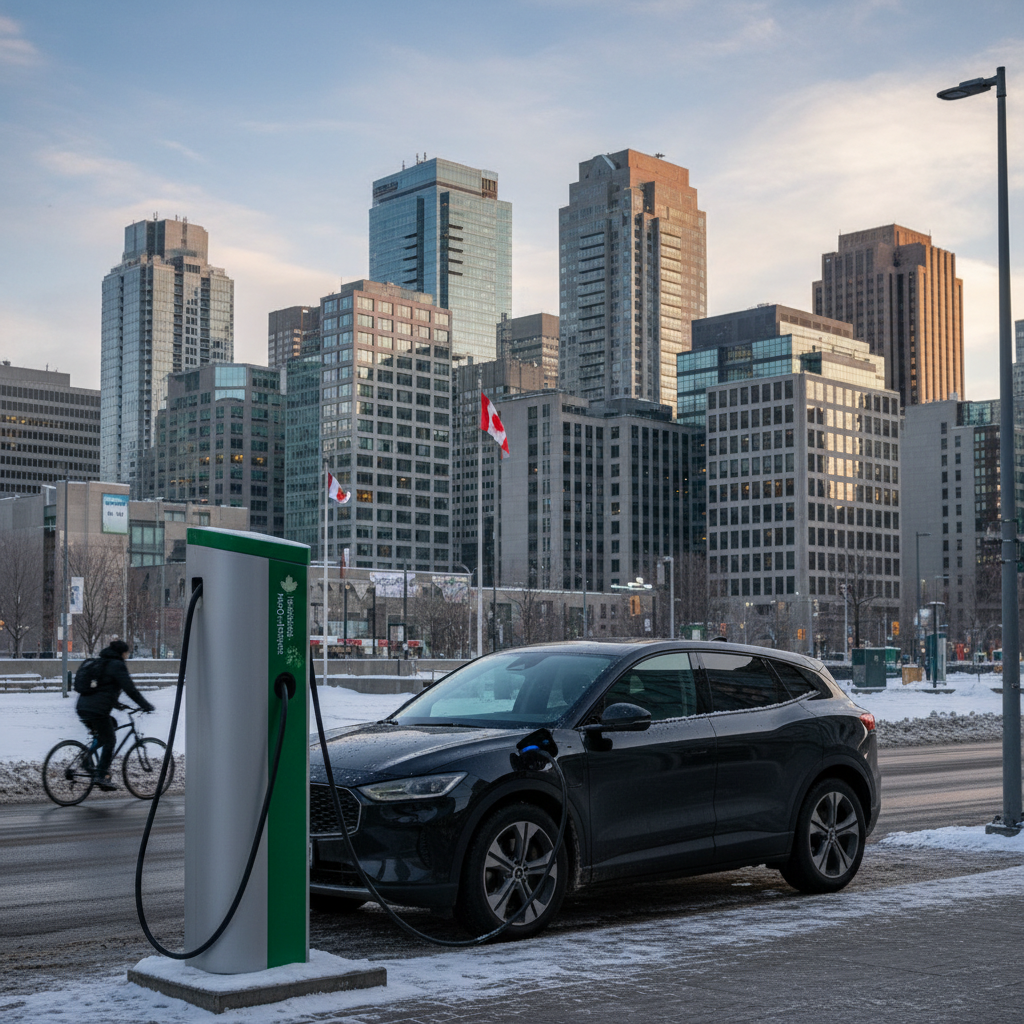
While Canada’s EV infrastructure is growing rapidly, especially in urban centers, challenges remain in rural and northern regions. Fisker’s potential success in Canada depends not only on affordability and design, but also on vehicle resilience, access to charging networks, and total cost of ownership.
The Ocean SUV’s initial specs—solar panel roof, long-range battery, and recycled materials—appeal to Canadian sustainability values. But price competitiveness is key. Unless Fisker can localize production or qualify for Canadian EV rebates, its vehicles may be outpriced by competitors that manufacture within North America or offer stronger support networks.
Can Fisker Align with Canada’s EV Future?
Canada’s clean transportation shift is irreversible. With over $50 billion in public-private investments committed to EV supply chains and charging infrastructure by 2030, the opportunity for innovative automakers is significant. Fisker has a vision that aligns with Canada’s direction, but vision alone won’t be enough.
To remain relevant in Canada’s investor landscape, Fisker must prove its ability to scale efficiently, possibly shift some production closer to North American markets, and rebuild institutional trust. Strategic partnerships—with suppliers or even Canadian manufacturing firms—could transform its risk profile and open new doors for growth across provinces.
For now, Canadian investors should view Fisker as a speculative but intriguing opportunity. While high risk persists, so does the possibility of long-term reward, especially if the company adapts to the North American energy and mobility framework Canada is actively building.