
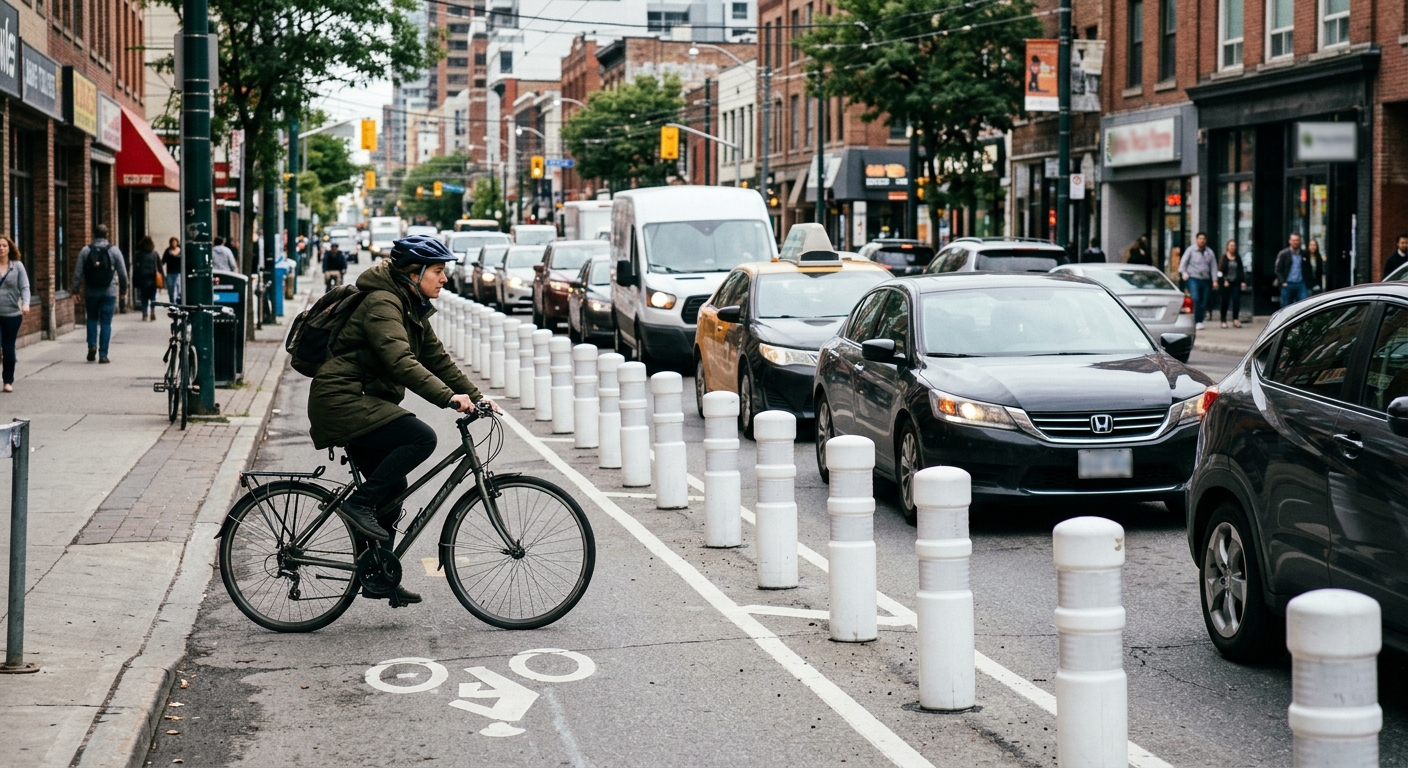
AI-generated illustration; not a photograph of the reported event.
- calendar_today October 13, 2026
Supreme Court to Hear Bike Lane Removal Dispute
Cycling advocates are seeking to escalate their legal fight against the Ford government’s efforts to remove bike lanes from three major Toronto streets, with a new appeal to the Supreme Court of Canada. This court challenge follows a series of lower court decisions and brings national attention to the ongoing debate over urban transportation and street design.
Ontario Court of Appeal Clears Way for Bike Lane Removal
In August, the Ontario Court of Appeal overturned a previous ruling which had found that the removal of bike lanes violated the Canadian Charter of Rights and Freedoms. This decision allowed the Ontario government to move forward with its plans, originally introduced at the end of 2024, aimed at restoring space for vehicle lanes and removing bike infrastructure on specific stretches of Bloor Street West, Yonge Street, and University Avenue.
Work Begins on Bloor Street West
On Tuesday, Ontario’s government announced it would start converting a 600-metre segment of Bloor Street West back to vehicle-only lanes. This marks the initial phase of the broader bike lane removal plan, sparking renewed controversy and calls for action among transportation advocates and residents who use these popular urban routes.
Cycling Advocates and Ecojustice Launch Supreme Court Appeal
CycleTO and Ecojustice, two organizations that initiated the original charter challenge, have revealed their intention to take their case to Canada’s highest court. The groups argue that the policy to remove bike lanes is unconstitutional and have asked the Supreme Court to strike it down. Their appeal also calls on the court to weigh in on the broader question of a government’s ability to pass what they describe as potentially life-threatening legislation affecting urban transportation users.
Broader Implications Beyond Ontario
Bronwyn Roe with Ecojustice emphasized that the consequences of the case extend "far beyond bike lanes and beyond Ontario." The organizations involved contend that the outcome could set a precedent for how Canadian governments approach the balance between vehicle lanes and cycling infrastructure, as well as the role of courts in reviewing such policies through the lens of the Charter of Rights and Freedoms.
Policy Background and Ongoing Debate
The Ford government's bike lane removal policy was first introduced at the end of 2024 as part of an effort to increase vehicle capacity on major Toronto streets. This initiative has remained contentious, dividing public opinion and prompting mobilization from groups concerned about the safety and accessibility of urban transportation. As the Supreme Court prepares to consider the cycling advocates’ challenge, the debate continues regarding the best use of public road space in Toronto and other Canadian cities.
Source: globalnews.ca.