- calendar_today August 9, 2025
A Nationwide Chill in Real Estate Activity
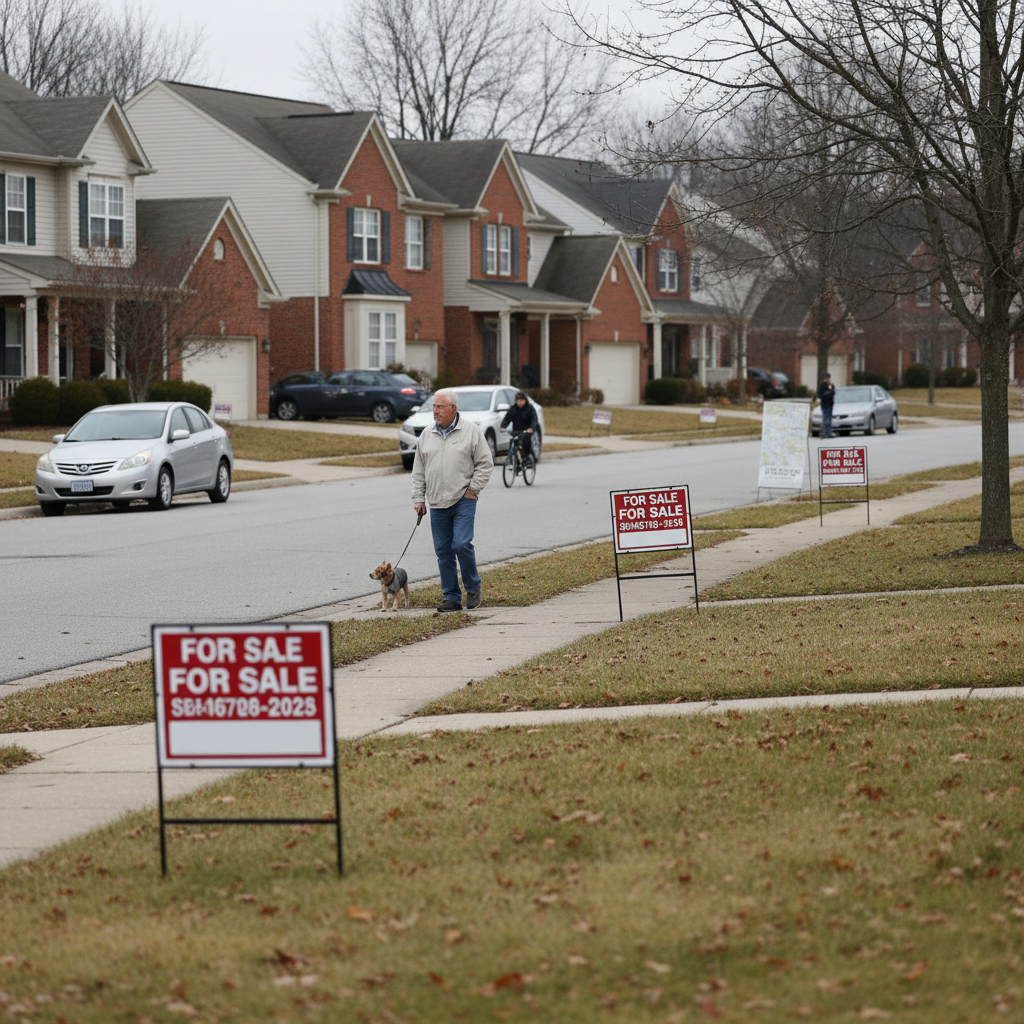
Canada’s housing market has entered a period of pronounced stagnation in 2025. After years of overheated growth, the industry is seeing a broad-based cooldown driven by elevated interest rates, affordability challenges, and investor caution. Whether it’s the bustling cores of Toronto and Vancouver or smaller cities in the Prairies and Atlantic provinces, the story is consistent: buyers are hesitating, sellers are holding off, and prices are plateauing or dipping.
According to the Canadian Real Estate Association (CREA), national home sales have declined nearly 12% in the first half of 2025 compared to the same period in 2024. Inventory is climbing in major metros but remains tight in rural and suburban areas, contributing to regional variations. Nonetheless, a consistent market-wide trend has emerged: hesitation.
Interest Rates: The Central Drag
Much of the current slowdown can be traced to the Bank of Canada’s aggressive interest rate stance. While inflation has moderated, policymakers have been slow to lower rates significantly, with the overnight rate lingering above 5% for much of 2025.
This high-rate environment has dramatically reduced mortgage affordability. First-time buyers—already squeezed by high home prices—now face monthly payments that are significantly higher than in 2021 or 2022. For example, a typical $600,000 mortgage with 20% down now costs roughly $700 more per month than it did two years ago.
Variable-rate mortgage holders are also feeling the pinch, with some opting to sell or refinance at a loss.
A Shift in Buyer Psychology
Beyond interest rates, the psychology of buyers has changed in Canada. Years of intense price growth during the pandemic era created a fear-of-missing-out (FOMO) mentality. But 2025 has ushered in a new sentiment: caution.
Prospective homeowners are increasingly adopting a “wait and see” approach, concerned that prices may fall further or that economic conditions could worsen. The job market, while stable, isn’t as robust as in prior years, particularly in sectors like tech and finance. Wage growth has not kept pace with inflation, and consumer debt levels remain near historic highs.
This has discouraged speculative buying and cooled demand in previously red-hot regions like Greater Vancouver, Ottawa, and the Golden Horseshoe.
Regional Overview: Variations on a Freeze
Ontario and British Columbia are seeing notable slowdowns in transaction volume. In Toronto and Vancouver, prices have slipped 4–6% year-over-year, and bidding wars are rare. While demand remains for certain property types—such as multi-family and mid-market condos—luxury and detached home sales have slowed considerably.
Prairie Provinces are more insulated thanks to relatively affordable home prices and strong employment in energy and agriculture. However, even here, the pace of sales has declined. Calgary’s market, which saw a surge in interprovincial migration during the pandemic, is now normalizing.
Montreal and Quebec City are experiencing similar headwinds. Rising mortgage costs have slowed down investor activity, particularly in the condo market. Quebec’s stable labor market has helped cushion the blow somewhat, but the market has undeniably cooled.
Nova Scotia, New Brunswick, PEI, and Newfoundland experienced rapid price growth during the pandemic as remote workers moved in. In 2025, those gains are tapering. Housing affordability has eroded here too, and inventory is rising in cities like Halifax and Moncton.
In Yukon, Northwest Territories, and Nunavut, unique factors such as logistical constraints, low housing stock, and government-subsidized construction impact the market differently. Nonetheless, activity has cooled due to broader national uncertainty and limited migration.
The Rental Market Tightrope
As ownership becomes less accessible, pressure has shifted to the rental market. Vacancy rates are at record lows in cities like Toronto, Victoria, and Halifax. Rents have increased by 7–10% year-over-year nationally, putting additional pressure on younger Canadians and recent immigrants who can’t afford to buy.
This rental squeeze is prompting some provincial governments to explore stricter rent controls, though developers warn this could further limit new construction—worsening supply problems in the long term.
Builders and Investors Pull Back
New housing starts have slowed dramatically in 2025. Developers are citing high borrowing costs, labor shortages, and material inflation as reasons for delaying or cancelling projects. According to CMHC, national housing starts dropped by over 15% year-over-year.
Institutional investors and REITs have also adopted a cautious stance. Many are redirecting capital into commercial or industrial assets—or waiting for interest rates to decline before re-entering the residential market in full force.
Government Measures: Limited Short-Term Relief
While federal and provincial governments have announced housing affordability programs, most solutions remain long-term in nature. The Housing Accelerator Fund and tax incentives for new builds will take time to bear fruit. Immigration targets remain high, which supports long-term demand but also adds short-term pressure to both the rental and homeownership markets.
Calls for the Bank of Canada to cut rates have grown louder, but with inflation still hovering near the 3% mark, major policy shifts are unlikely until late 2025 or early 2026.
What Lies Ahead?
The Canadian housing market is not crashing, but it is undeniably frozen. The market remains in a state of suspended animation—waiting for a shift in interest rates, greater affordability, or a meaningful boost in consumer confidence.
Until one of those levers changes, expect a cautious environment where sellers must price competitively and buyers are fewer but better informed. For those waiting for a “bottom,” it may not be a sharp drop, but a prolonged chill.
Canada’s 2025 housing market is characterized not by panic—but by pause. Interest rate headwinds, affordability constraints, and a shift in consumer sentiment have brought a once red-hot market to a temporary standstill. Whether you’re a buyer, seller, investor, or policymaker, understanding this moment of inertia is key to navigating what lies ahead.