- calendar_today September 2, 2025
Apple has discovered a new way to win the trade war against President Donald Trump: by flattering the president’s ego. On Wednesday, Trump said Apple will be spared a pending 100 percent tariff on semiconductors, a tariff that would have made iPhones significantly more expensive to buy in global markets. Reuters reported that the waiver, which was shared on the same day Apple announced an additional $100 billion investment in the U.S., came after Apple’s CEO Tim Cook presented Trump with a personalized statue of gold.
Cook told Trump that the statue was made by Corning, an Apple supplier that produces specialty glass for iPhones. The “minimalist Apple logo sculpture,” which was cut out of a large circle of glass that contained a heavy Apple logo in its center, was designed by a former corporal in the U.S. Marine Corps who now works for Apple, according to Cook. Cook said the statue came from Utah and was given to Trump, along with its 24-karat gold base that had the president’s name engraved on it. Cook signed the bottom with a “Made in America” note.
Trump, who has long pressured companies to produce more goods in the U.S., seemed to like the gift. He told Apple and other companies that build factories in the U.S. that they would pay “no charge” when tariff barriers for semiconductors officially kick in. The move is a major victory for Apple, which has been the target of months of personal criticism from Trump about where its supply chain is based.
Apple and Trump’s last go-around over iPhones happened this spring. Trump had berated the company for weeks for not shifting iPhone production into the U.S. and instead for moving more of its production to India. In April, Trump told a reporter that consumers could expect “Made in America” iPhones if our trade policies work out.” By May, his patience was waning, and Trump made more direct comments on Air Force One while en route to the Middle East. “I have a little problem with Tim Cook,” Trump said, according to Axios. Trump is reported to have also told Cook directly, “We are treating you really good, we put up with all the plants you built in China for years. We are not interested in you building in India.”
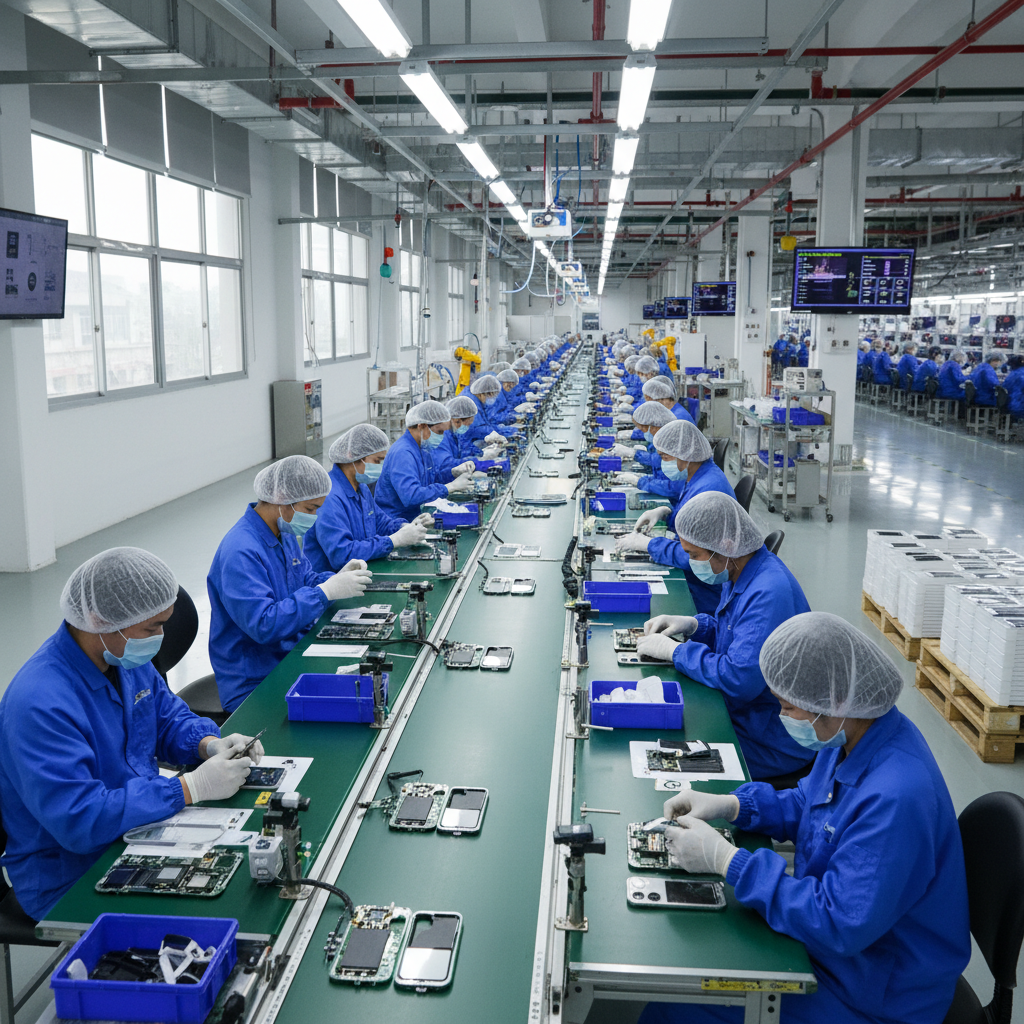
Analysts, meanwhile, have been consistently clear on the process to shift production into the U.S. It could take years, and might not be possible at all. Trump’s team wasn’t so sure. They pushed a narrative for weeks that shifting iPhone assembly into the U.S. was imminent. In May, Commerce Secretary Howard Lutnick said Apple was exploring “robotic arms” that would provide the same high precision that its existing Chinese factories offer.
Cook’s Wednesday meeting and Trump’s subsequent comments suggest the president has backed down on his previous demands. Trump threatened a 25 percent tariff on Apple if iPhones were not assembled in the U.S., and has recently said Apple’s recent investment “is a significant step toward the ultimate goal of ensuring that iPhones sold in America also are made in America.” At this point, he has seemingly taken a step back.
Cook has maintained that components of the iPhone, such as semiconductors, glass, and Face ID, are already produced in the U.S. Cook, though, has provided no timeline for when Apple’s final assembly might come to the U.S. He has only said that it would remain in Asia “for a while.”
Apple is no stranger to this playbook of winning with grand investment announcements and symbolic trinkets. Throughout Trump’s first term, Cook effectively charmed the president with U.S. investment pledges and danced around his more combative requests. In 2017, Trump hailed a plan for Apple to build three “big, beautiful” plants in the U.S. Two of them never materialized, and the third built a factory in Austin, Texas, to make face masks instead of consumer electronics. A similar trade war performance took place in 2019. Trump visited a Texas facility that he had previously suggested could build iPhones. The plant, though, has been retooled to produce MacBook Pro, not iPhones.
Now, Cook has promised to invest a total of $600 billion in the U.S. over the next four years. The number, as impressive as it sounds, isn’t out of line with what Apple typically spends, or has previously pledged, during the Biden administration or Trump’s previous term. In other words, Apple’s promise to Trump may not be much of a concession at all.
Trump has made it clear that any company that doesn’t provide such proof of investment is liable for retroactive tariffs. Apple, at least based on its recent actions, is simply continuing to make the investments it always intended to and keeping iPhone assembly in Asia. Tariff calculus has not changed, and Trump doesn’t seem to want to force that change—at least, not yet.
Apple has a “savvy solution to the president’s demand that Apple manufacture all iPhones in the U.S.,” Nancy Tengler, CEO and chief investment officer of Laffer Tengler Investments, which owns Apple shares, told Reuters.
Cook’s touch, an ego massage for Trump, and Apple’s high-stakes and calculated investments have bought Apple time in the trade war. Trump is happy to frame the moves as “Made in America” progress. But it seems increasingly clear that Apple has no intention of moving its most complex manufacturing operations stateside.