
- calendar_today August 28, 2025
Animation as a Cultural Ambassador for Korea
A new animated Korean pop movie has captured the world’s attention, crossing over from K-pop fan circles to top the global Netflix rankings in just two weeks since its June release. The 101-minute film called KPop Demon Hunters has been streamed over 33 million times. It has entered Netflix’s global top 10 in 93 countries and now ranks second overall. Fans have already created fan art, and the call for a sequel grows stronger online by the day.
The trend does not end on Netflix either. Since June 20, when the film premiered, the two all-female Korean bands featured in its plot — the good-natured Huntr/x and their villainous rivals Saja Boys — have topped music charts worldwide, outperforming BTS and Blackpink. Seven songs from the film made it onto the Billboard Hot 100 and occupied both the first and second place on Spotify’s US chart. A feat that real-life bands have yet to match for fictional characters.
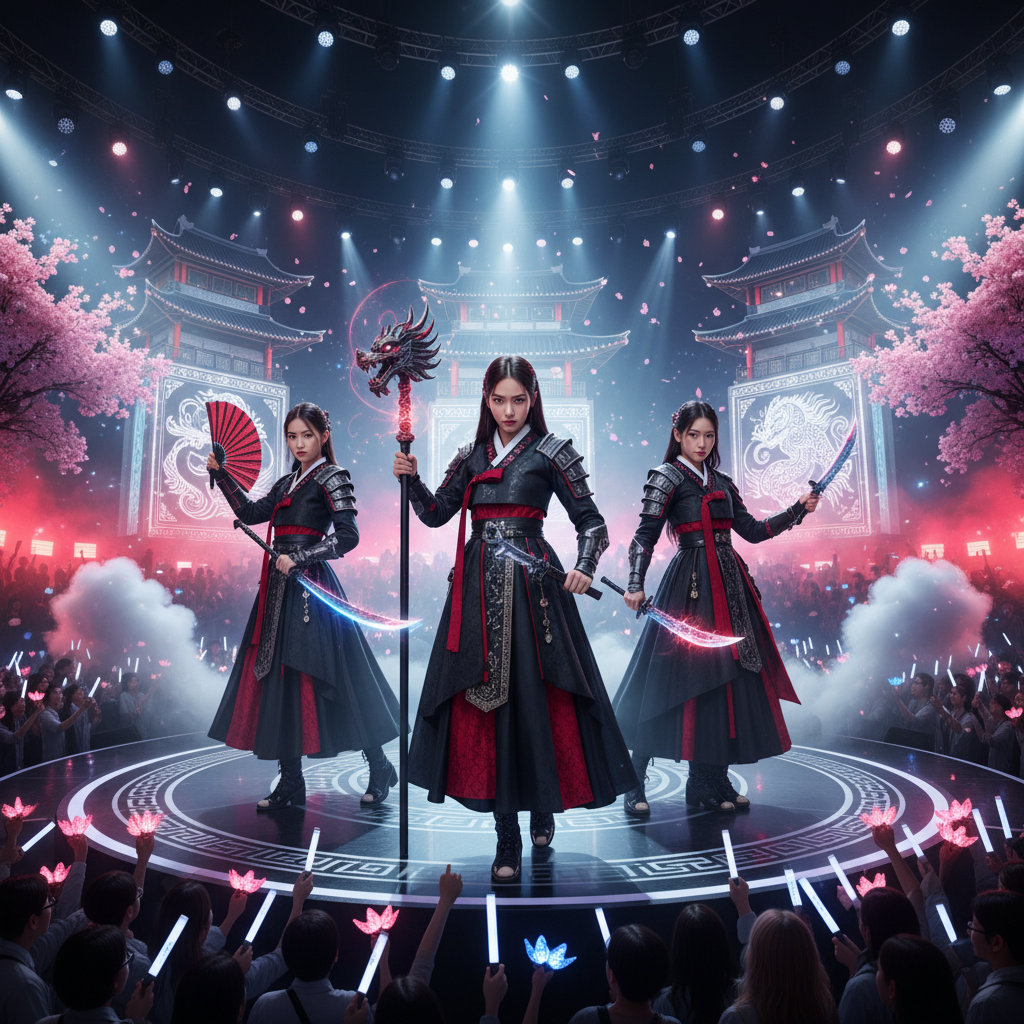
KPop Demon Hunters presents the adventures of Rumi, Mira, and Zoey from Huntr/x, three young girls with full-time jobs as global superstars and moonlighting as demon slayers protecting the world from otherworldly forces. They battle the eponymous Saja Boys with breathtaking concert performances, slick choreography, and a common-schoolgirl narrative about friendship, trust, and self-identity. Humour, heart, and a touch of fantasy combined to attract viewers around the globe.
The visuals and plot hook viewers, but it is the music that rakes KPop Demon Hunters from online meme to chart-busting Netflix release. Maggie Kang, co-director of the film, was born Korean-Canadian and found inspiration in the K-pop idols that surrounded her in the early 2000s. Music is a part of the show’s world and is almost an element of magic that repels dark forces. The songs are integrated into the storylines in a way that does not distract from the plot, but rather complements it. “It gives the film a surprising level of maturity,” says Lashai Ben Salmi, a community leader focused on Korean communities in Europe.
In search of this quality, Kang and Chris Appelhans, who co-directed the movie, collaborated with a Korean label and enlisted industry superstars Teddy Park (known for his work with Blackpink) and Lindgren, who has worked with BTS, TWICE, and IU. The pair recorded original songs that are as catchy and likely to top the charts as many real-life K-pop hits. Amanda Golka, a Los Angeles-based content creator who is not particularly immersed in the K-pop scene, says she is a fan. “I have been blasting the soundtrack from Spotify every time I’m in the car,” she reports. “It’s fascinating how music can be such a universal language.”
Tradition in Fashion, Pop in Trend
Cultural authenticity was another of the film’s success factors. K-pop, K-dramas ,and Korean cinema have already gone mainstream in the US and Western markets, but KPop Demon Hunters took the representation to a new level. The film sprinkles everyday life in Korea in its scenes, showing how characters hold chopsticks, place their bowls in traditional restaurants, or eat noodles with a spoon and one hand. Viewers can also see historic sites in Seoul, such as ancient city walls, Hanuiwon clinics and public bathhouses, and Namsan Tower, which serves as a set piece. The directors have also been sensitive to cultural stereotypes, moving beyond clichés to offer Korean viewers a rare opportunity to see their culture represented respectfully and authentically.
The crew was in South Korea to conduct research for production. They visited folk villages, took photos of street shopping in Myeongdong, and studied traditional hanbok in detail. They then translated their findings into character design and animation: while speaking English in the final film, the characters’ lip movements match Korean pronunciation, and their facial expressions are truer to life. Scenes with Korean words or lyrics that are subtitled in English are woven into the narrative.
Beyond South Korea-specific content, the movie’s treatment of Korean fans offers a faithful rendering of K-pop fandom as well. From fan signing events to the orange and pink glow of light sticks, from Kalgunmu (dance performances where every step is perfectly synchronised with the stage) to Korean-language banners, the movie covers it all. It embraces the entire ecosystem of K-pop culture rather than zooming in on a single group or genre, making the show accessible for casual viewers and rewarding long-time K-pop fans with insider moments.
The traditional also weaves its way into the film’s fantasy action, with K-pop crossed with Korean folklore. Huntr/x’s swords and fans, for example, are similar to the instruments used by Mudang, Korean shamans, while the Saja Boys appear similar to the Korean Grim Reaper. Other figures and symbols include Dangsan trees and Dokkaebi goblins from folklore, and folk-inspired mascots — Derpy the tiger and Sussy the magpie — that serve as guardians or symbols of good fortune.
At its heart, however, KPop Demon Hunters is a coming-of-age story about self-acceptance. The characters all deal with questions of identity, learn to trust themselves, and come to embrace their true nature. “Your friends may not understand right away, but they do love you and they will figure it out,” says Golka. “I think that has resonated with people.”
Mixing top-of-the-line K-pop, authentic cultural detail, and relatable coming-of-age themes, KPop Demon Hunters is more than just another Netflix animated film. It is a cultural bridge between Korean and non-Korean fans, a love letter to pop, and a show that reflects Korean pop culture’s wider impact on global entertainment. For now, it is still a Netflix hit and a chart-topping soundtrack — and judging by fan reaction, the story is only just beginning.