- calendar_today August 12, 2025
VANCOUVER —
The light in Canada is never just light. It filters through mist in the west, gleams over prairie fields, and glows soft pink above Atlantic towns. Now, in that same light, a new shimmer has appeared: drive-in screens glowing across the nation once more.
In 2025, Canadians have reclaimed one of their most tender traditions. Drive-in theaters — long thought to belong to memory — are alive again, stitching together coasts, cities, and countrysides with the soft pulse of shared experience.
A Quiet Comeback, a Loud Response
It began quietly. A pilot project in British Columbia used portable LED screens to bring cinema back to rural towns. Then came community fundraisers in Manitoba, where volunteers set up makeshift lots in hockey rink parking spaces. By autumn, screens were rising in every province — some permanent, some temporary, all glowing like lanterns in the dark.
“People didn’t just come to watch,” says event organizer Leo Fournier in Quebec City. “They came to feel part of something again.”
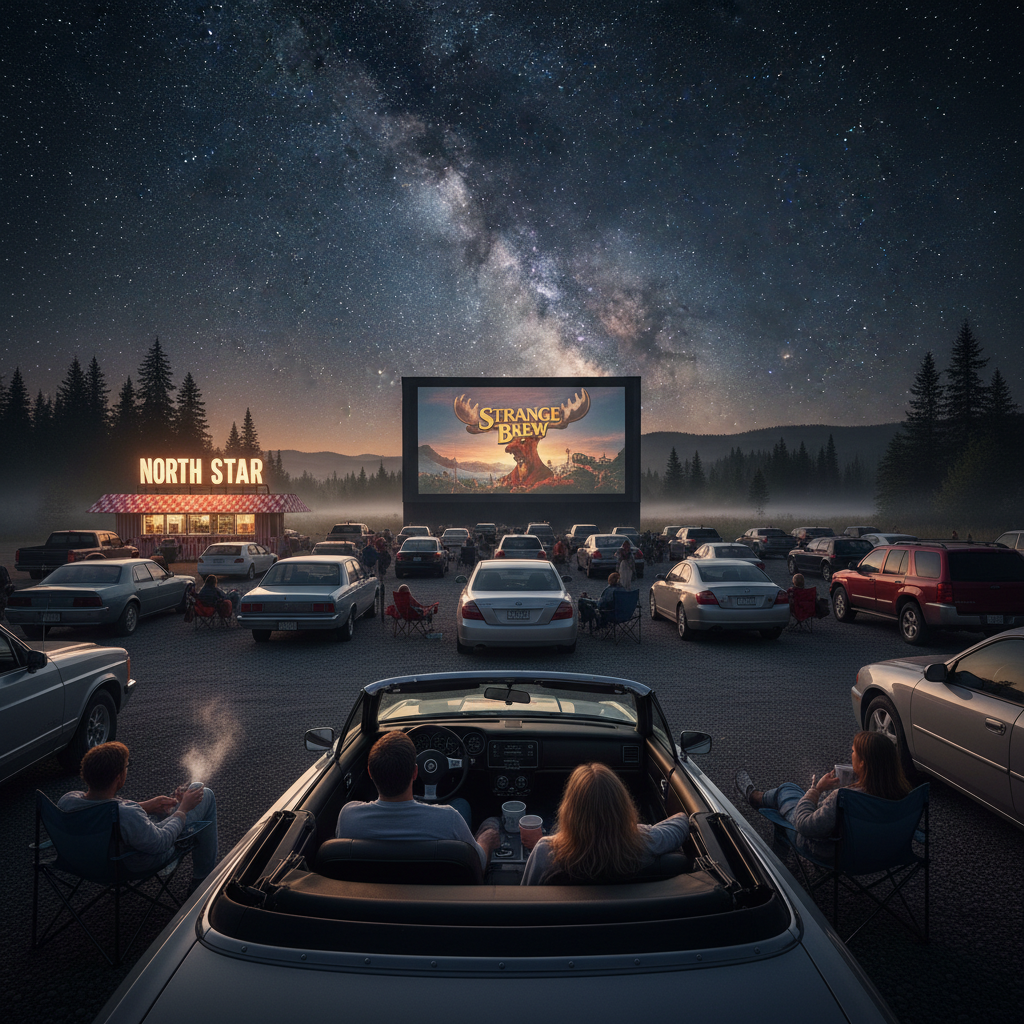
Across the country, drive-ins have become weekend rituals. In Calgary, food trucks serve poutine and cinnamon donuts. In Newfoundland, you can hear the sea crashing just beyond the speakers. In the territories, auroras sometimes ripple overhead mid-scene, and the audience laughs — because no Hollywood effect can top that.
Old Soul, Northern Touch
The magic lies in how distinctly Canadian each drive-in feels. The blend of cultures, climates, and accents turns every showing into its own story. A family in Ontario brings Tim Hortons cups. In New Brunswick, locals park snowmobiles beside cars in early spring. Out west, cyclists coast in just as the first reel begins.
No two screens look the same, yet they share a heartbeat — a small act of defiance against the digital sprawl of modern life.
“The drive-in is where you remember who your neighbors are,” says Calgary resident Jenna Leung. “It’s slow, it’s real, and it’s ours.”
A Fusion of Past and Present
While nostalgia fuels the revival, innovation sustains it. The modern Canadian drive-in marries heritage with practicality:
- Solar projection for sustainability and reliability in remote towns
- Bilingual screenings bridging language and region
- Local filmmakers featured before the main show, turning each night into a micro film festival
- App-based ticketing and concessions, making the experience smooth but still personal
At a screening in Toronto, an indie short from Nunavut played before the feature. The crowd honked and clapped through car windows. “It wasn’t just a movie,” says attendee Raj Patel. “It was a reminder that we’re all part of the same country, even when it feels too big to touch.”
The Feeling of Together Again
Canada’s drive-in revival isn’t just about entertainment. It’s about emotional weather — the thawing of isolation after long winters, both literal and metaphorical.
In small towns, people who hadn’t spoken in years now wave from adjacent cars. In big cities, strangers share snacks through cracked windows. There’s no algorithm, no curated feed — only headlights, laughter, and breath steaming in the cool night air.
The films vary — blockbusters, classics, indie dramas — but the feeling never does. It’s the sound of a hundred quiet engines idling in harmony, the flicker of light on windshields, the faint hum of belonging.
The Country as a Theater
From Yukon’s open tundra to Vancouver Island’s fog-laced edges, every Canadian province has found its own screen beneath the sky. It’s not about reclaiming a past time — it’s about reinventing a rhythm: the gathering, the stillness, the exhale after the credits roll.
When the movie ends, there’s no applause — just that peaceful hesitation before engines start again. Children fall asleep before the drive home. Couples sit in silence, hands intertwined. The glow of the projector fades, but the warmth remains.
The return of drive-ins is not nostalgia dressed as novelty. It’s a quiet act of remembrance: that community can be built from stillness, and that sometimes the most powerful stories aren’t the ones on screen — but the ones unfolding between us, in the dark, under the northern sky.