
- calendar_today August 24, 2025
.
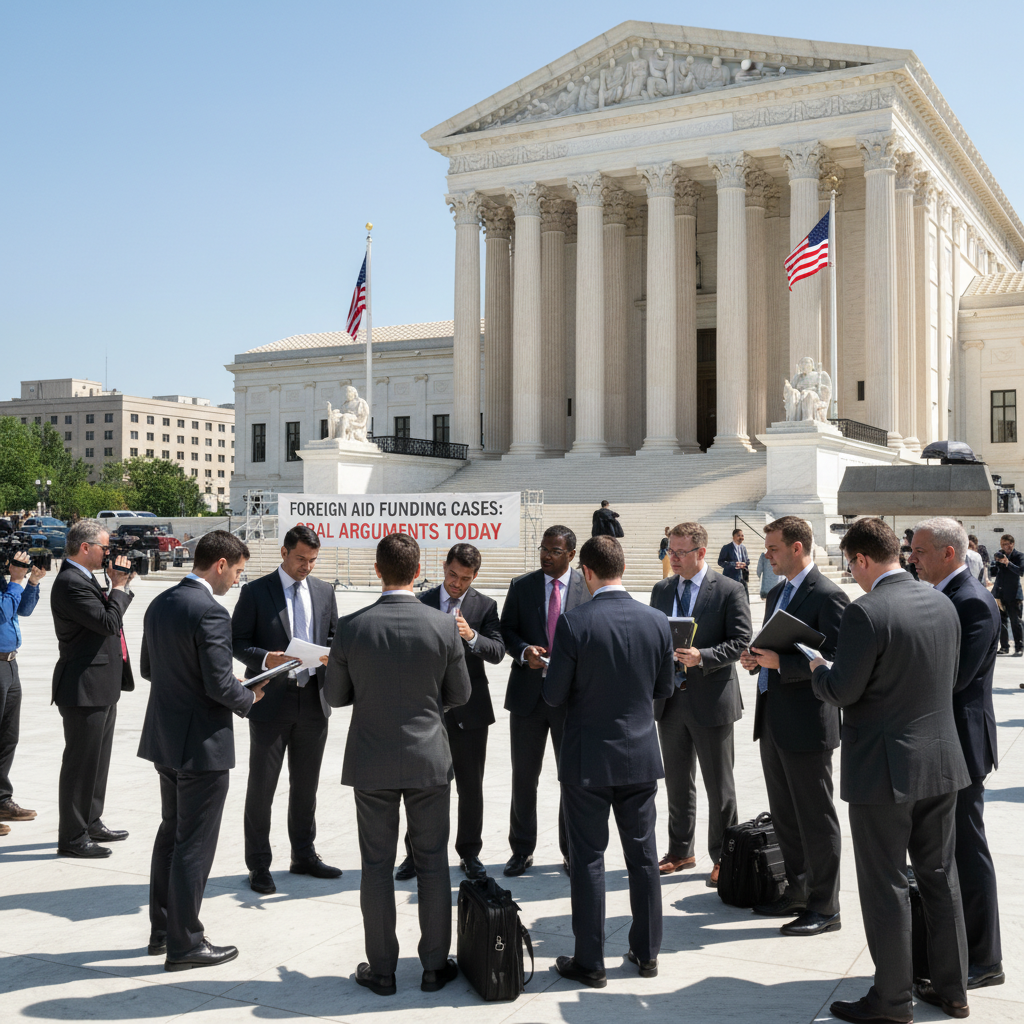
On Tuesday night, the Trump administration’s lawyers asked the Supreme Court to stop the Justice Department from disbursing billions of dollars in foreign aid spending that Congress approved last year. The filing, an emergency request to the justices to intervene in the case, effectively returns the U.S. Agency for International Development (USAID) funding fight to the high court for the second time in less than six months.
The sum at issue is just shy of $12 billion in foreign aid that the administration is required to spend before the current fiscal year ends on September 30. As part of a wider effort to slash what he has called “waste, fraud, and abuse,” Trump, days after his return to the White House in January, signed an executive order on his first day back in office instructing the federal government to block nearly all foreign aid spending. (The president’s order exempted humanitarian aid and some national security-related spending from the ban.)
The administration was sued over that order almost immediately after it was issued. In February, U.S. District Judge Amir Ali in the District of Columbia blocked the White House from blocking the payments. “Congress gave its ok, and the money has to be spent,” Ali said in a written ruling. Ali also instructed the Trump administration to resume payment on billions in USAID grants that he found to be mandatory and already approved by Congress.
Trump, however, was not finished. A federal appeals court in Washington, D.C., heard the case earlier this month and voted 2-1 to throw out Ali’s injunction. In a written opinion, Judge Karen L. Henderson, an appointee of President George H.W. Bush, said the plaintiffs — foreign aid groups who want their grant payments restored — do not have the legal standing to sue the administration. Henderson wrote that the foreign aid groups did not have a proper “cause of action” against the Trump administration under a process known as the doctrine of impoundment.
For Trump, the D.C. Circuit court’s ruling was a major victory. The federal appeals court, however, has not issued a mandate to officially make its ruling stick. That means Judge Ali’s injunction and payment schedule remain in place, leaving the administration in a race against time before the fiscal year ends on September 30, when the money becomes far more difficult to claw back.
“The September 30 statutory deadline looms, and absent this Court’s intervention, the Government will be forced to rapidly obligate some $12 billion in foreign-aid funds,” U.S. Solicitor General D. John Sauer, who filed the emergency appeal with the Supreme Court on Tuesday, said in court papers.
He added that federal courts should not be resolving the issue. Sauer continued, “Congress did not upset the delicate interbranch balance by allowing for unlimited, unconstrained private suits. Any lingering dispute about the proper disposition of funds that the President seeks to rescind shortly before they expire should be left to the political branches, not effectively prejudged by the district court.”
The plaintiffs in the case, a coalition of foreign aid groups that point to projects that are funded by USAID grants, have a different view. They say the president has no power to rescind money that Congress had already appropriated. The groups cite the Impoundment Control Act (ICA), a 1970s law passed to rein in executive discretion over federal spending. The foreign aid groups also point to the Administrative Procedure Act as the critical legal precedent for their claim.
In essence, the fight is about more than whether these billions in foreign aid payments are ultimately released. It is also about the breadth of presidential power. If Trump wins the fight, it would greatly enhance his ability to rescind or delay money already approved by Congress. If the plaintiffs win, it would narrow the executive’s spending discretion.
The Supreme Court is familiar with the issue. In June, the justices issued a narrow 5-4 ruling in the same fight. The window, however, is closing, and with billions of dollars at stake, the justices once again may be pressed to get involved.
For the administration, a victory in the case would move money out of the foreign aid grants that the president, during his first administration, had earmarked for cuts. For the aid groups, the stakes are more dire: if the money is not released, projects already in the pipeline and underway in other countries may have to be scaled back or canceled.