
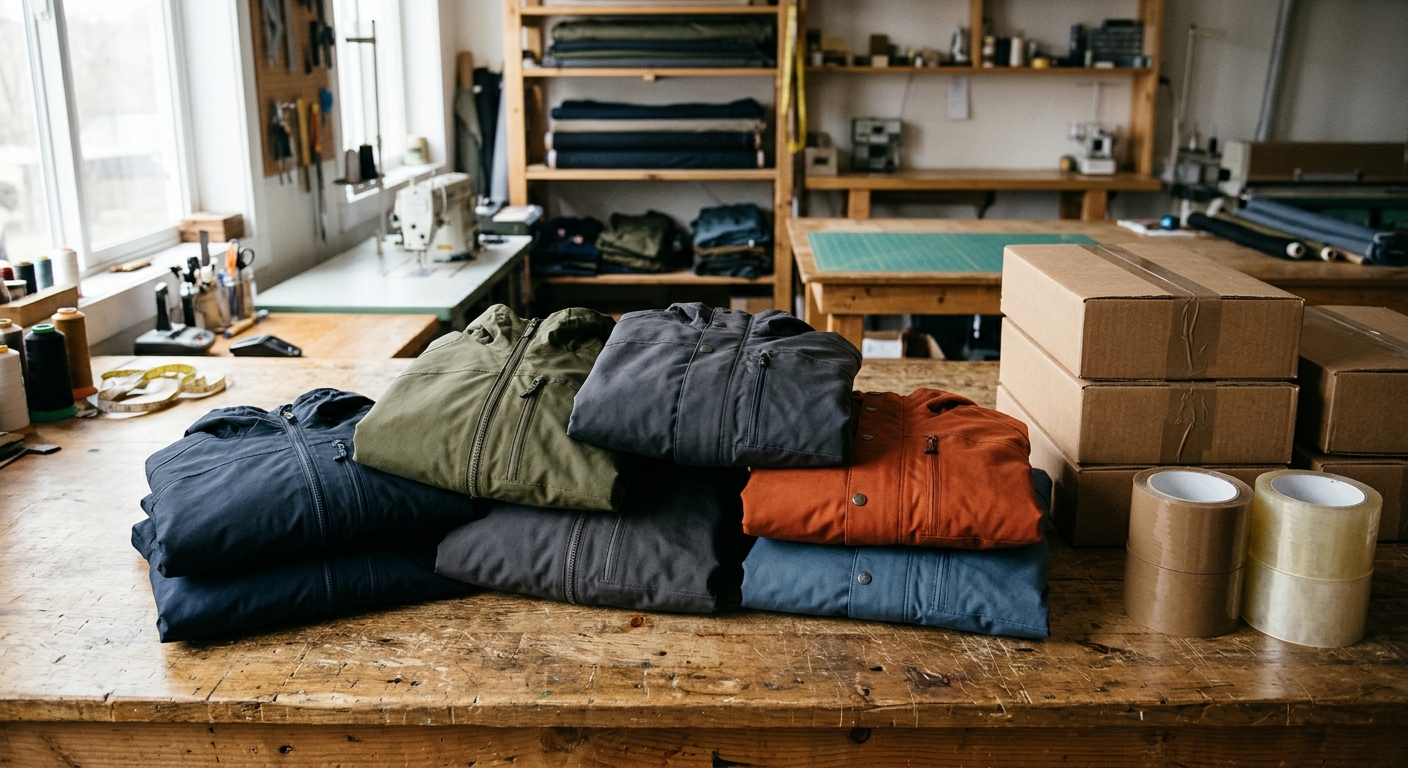
AI-generated illustration; not a photograph of the reported event.
- calendar_today November 7, 2026
Fairechild Adjusts to U.S. Trade Dispute
The continuing trade war between Canada and the United States is putting pressure on a Dartmouth-based clothing company, Fairechild, forcing the small business to halt its shipments to American customers and reconsider its business model.
Sustainable Outerwear and Business Model
Fairechild specializes in producing outerwear made from sustainable fabrics constructed out of recycled plastic bottles. These fabrics are sourced from a German supplier, and all garments are handcrafted at their studio in Dartmouth, Nova Scotia. Under the guidance of CEO Tabitha Osler, the company has cultivated a customer base split roughly in half between Canadian and U.S. buyers.
Unexpected Shipping and Brokerage Costs
Recently, Fairechild faced a surge in brokerage charges while shipping orders to the United States. Osler estimates that over a two to three month period, the company was forced to absorb at least $10,000 in unexpected fees. "We actually had to stop shipping to the States in August because we had been shipping to them using the rules that we felt were eligible on our type of product. And then just receiving all of these chargebacks of brokerage to us, probably $10,000 at least in the span of about two to three months, which we just had to absorb," Osler reported.
Impact of Changing Trade Rules
The sudden increase in costs has made the logistics of cross-border trade far more complicated for the business. While Fairechild previously shipped products under what it believed to be the correct classifications and duties, the current trade climate led to a reassessment. The company has paused all U.S. shipments and is evaluating options for managing duties and seeking preferential origin status for its products—a process that Osler says has become much more complex than before.
Ongoing Efforts and Small Business Challenges
Fairechild’s experience reflects the broader challenges that small businesses face amid international trade tensions and shifting customs and brokerage regulations. The pause on American shipments significantly impacts their sales, as a substantial portion of their market is based in the United States. The company continues to look for solutions to address these trade barriers, with hopes of resuming cross-border sales under fairer and more predictable conditions.
The Road Ahead
As the trade dispute continues to affect businesses at all levels, Fairechild’s situation highlights how rising shipping costs and complex import duties can threaten even established small brands. The company remains engaged in efforts to adapt and survive, navigating the challenging realities of cross-border commerce.
Related coverage
Source: globalnews.ca.